Home › The Queen Nofre-Ari › The Queen Nofre-Ari: Egypt
The Queen Nofre-Ari: Egypt
WERE the question to be asked, "What was the position of the people in these festivals?" and if that expression meant the plebeian throng of artisans, mechanics, laborers and soldiers, who today make up the living force of a nation, we should have to reply that the people did not exist in the Egypt of the Rameses, and that the day of their appearance and rise had not yet dawned upon any human community.
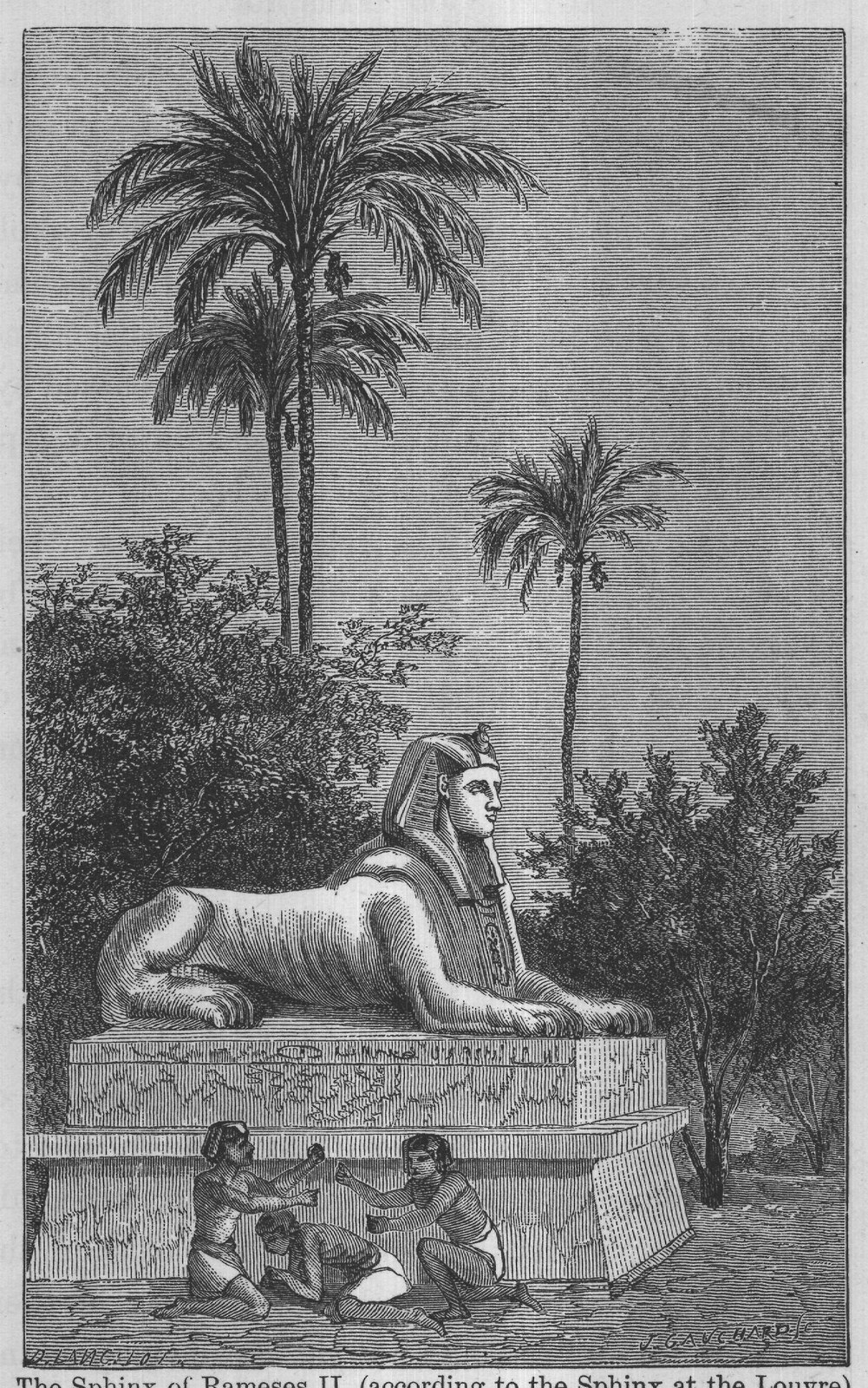
The Sphinx of Rameses II. (according to the Sphinx at the Louvre). Below these two classes, one of which was the educating and the other the conquering caste in the valley of the Nile, there were crowds of artisans, of workers-by-hand who, under the direction of chiefs belonging to the religious castes, cut and built masonry; melted and worked with the metals; spun flax and byssus; in fine, toiled at the trades assigned to them, from the cradle, by law or by descent. There were farmers who tilled the lands given to them by the King, the priests or the warriors who were the sole owners of the soil of the empire. Upon the borders of the deserts, around the oases and the broad levels of the Delta, lived herdsmen who transmitted, from father to son, the business of raising and guarding the flocks and herds of the royal ecclesiastical or military domains. But these shepherds, these laborers, these artisans, excluded by law from public affairs; deprived, also, of the right to bear arms and of plying various trades at once; liable to be condemned, for each offence, to imprisonment, fines or the bastinado, that great resource of the stationary East, could not be looked upon as citizens, by modern eyes. Indeed, they do not appear to have differed much, upon the land of Kemi, from the Sudras of India to whom the sovereign Master of things has assigned but one office, viz., that of serving the upper classes without depreciating their merits.* Below them, again, were the slaves who had been purchased in the markets or captured in war.
IX.