Visits his Mother
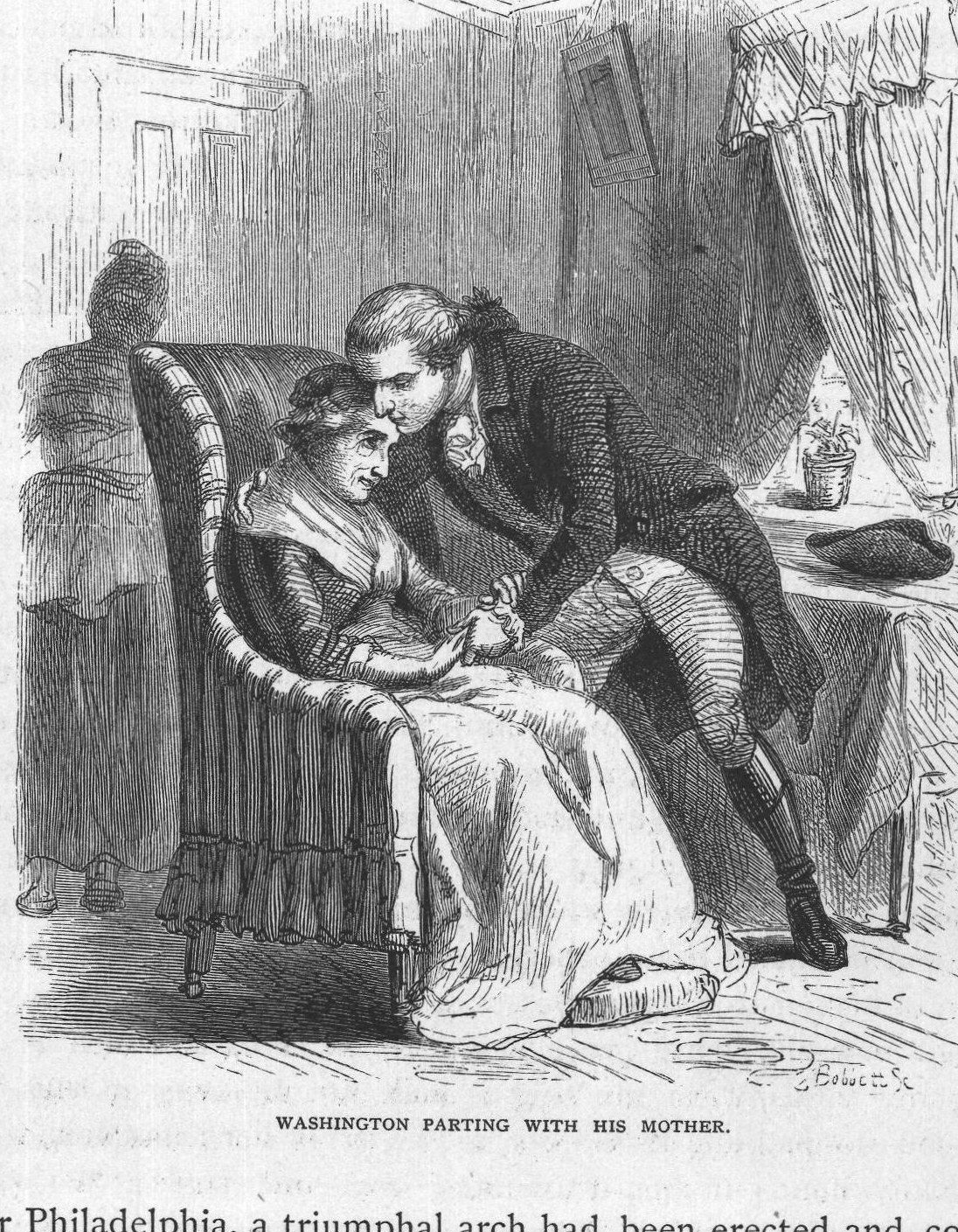
Washington was making the usual tour of his fields on the 14th of April, 1789, when Charles Thompson, the Secretary of the Continental Congress, arrived at Mount Vernon with a letter from John Langdon, the pro-tempore president of the United States Senate, announcing the election of the illustrious farmer to the Presidency of the republic. Washington accepted the office, and made immediate preparations for the journey to the seat of government. Toward evening, accompanied by his favorite body-servant, Billy, he left Mount Vernon and rode rapidly toward Fredericksburg, to visit his mother, then past eighty years of age and suffering from an incurable disease. The interview was a touching one. When he was about to leave, the son promised the mother, that so soon as public business would allow, he would hasten to Virginia to see her. "You will see me no more," said the aged matron; "my great age and the disease which is rapidly approaching my vitals, warn me that I shall not be long in this world." The dutiful son stooped and kissed her, as she sat in her arm-chair, when she took his brawny hands in her attenuated ones and said: "Go, George; fulfill the high destinies which Heaven appears to assign to you; go, my son, and may that Heaven's and your mother's blessing be with you always." They never met again on the earth. When Washington returned to Virginia, his mother's body was in the grave. She died in August, 1789, at the age of eighty-two years.
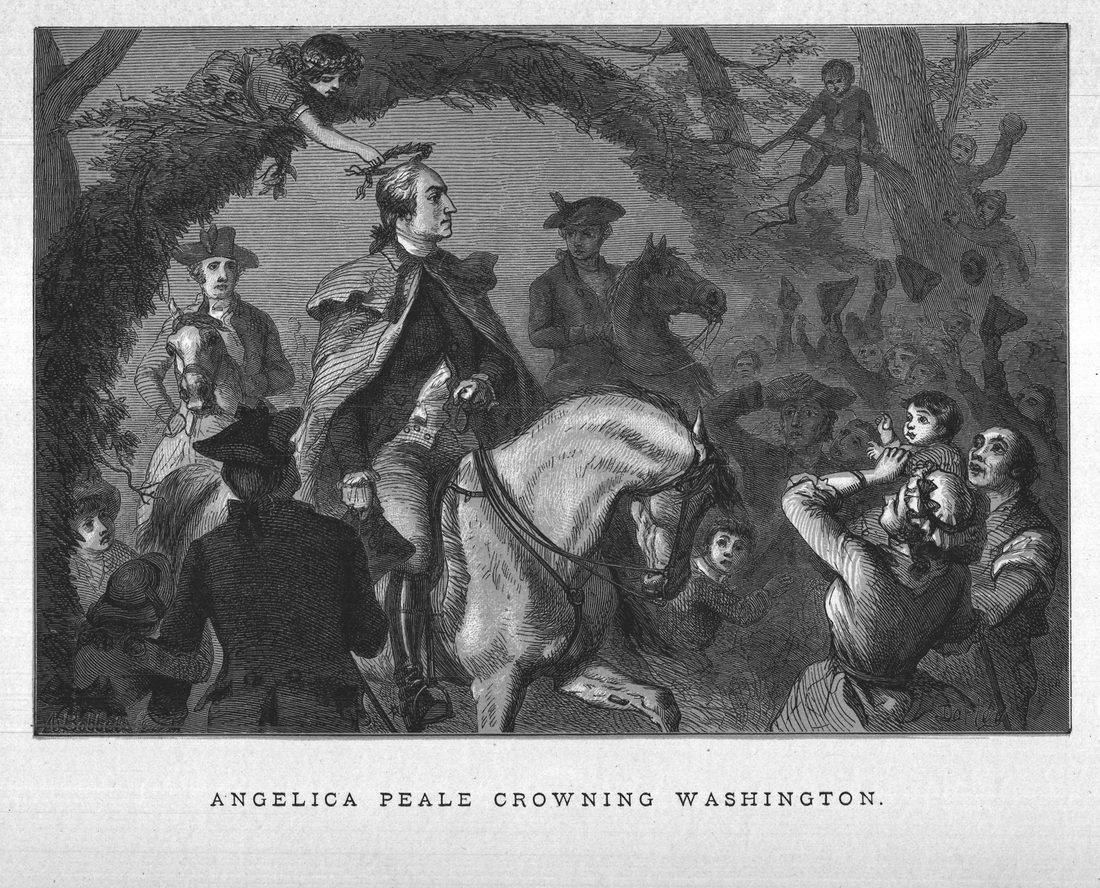
On the morning of the 6th of April, Washington left Mount Vernon for New York, accompanied by Mr. Thompson and Colonel Humphreys. He was met at his porter's lodge by a cavalcade of his neighbors and friends, who escorted him to Alexandria, where he partook of a public dinner. Everywhere on his journey he was greeted by demonstrations of the most profound respect and reverence. At Georgetown he was received with honors, and at Baltimore he was feasted. At Gray's Ferry on the Schuylkill, near Philadelphia, a triumphal arch had been erected and covered with laurel branches. As Washington passed through it, Angelica Peale, a daughter of the artist, Charles Wilson Peale-a child of rare beauty, concealed among the foliage-let down an ornamented civic crown of laurel which rested on the head of the Patriot. This incident drew from the multitude loud huzzas, and shouts of "Long live George Washington! long live the Father of his Country!" filled the air. When he crossed the Delaware at Trenton, the scene of one of his earliest victories in the war for independence, he was led through a triumphal arch erected upon a bridge that spanned a small stream over which he had retreated before Cornwallis more than twenty years before. The arch was supported by thirteen pillars trimmed with evergreens and flowers. It had been erected and adorned by the women of New Jersey, and bore the words: "The Defender of the Mothers, will be the Protector of the Daughters." Many mothers, with their daughters, appeared on each side of the structure, all dressed in white. As the President-elect passed through, thirteen young girls in white dresses, their heads adorned with flowers, and holding baskets of flowers in their hands, scattered some of them in his way, while they sang an ode of welcome.
At Elizabethtown Point, Washington was met by a committee from each house of Congress, and civil and military officers. They had prepared a magnificent barge for his reception, manned by thirteen pilots in white uniforms. In this the President-elect was conveyed to New York. The shipping in New York harbor was decorated with flags, and the waters swarmed with gaily-dressed small boats filled with ladies and gentlemen. There was an exception to the general display of honors. The Spanish ship-of-war Galveston, lying not far from the present Castle Garden, was not decorated, and was silent. This neglect-this seeming churlishness-was so marked, that it called forth severe comments, when suddenly, as the barge came abreast of her, she displayed, as if by magic, the flags of all nations, and fired a salute of thirteen guns. These were answered by guns from the battery on the shore; and in the midst of the roar of artillery and the shouts of a vast multitude of citizens, the Beloved Patriot landed at White-hall and was conducted to a house prepared for his residence on Franklin Square. Such was the reception of the first President-elect, at the seat of the new national government. There was general joy and good feeling, but satire and caricature appeared like ravens among bevies of white doves. Political parties were already beginning to take distinct shape. The friends of the Constitution, represented by Washington, were called Federalists, and those opposed to it were called Anti-Federalists. On the day after Washington's arrival a caricature appeared-silly enough, but charged with bitter feeling-in which the President was seen mounted on an ass, in the arms of Billy, Colonel David Humphreys leading the Jack and chanting hosannahs and birthday odes. The picture was full of disloyal and profane allusions. The Devil appeared prominent, and from his mouth issued the words:
When David shall conduct an ass."