The Formation of State Governments Recommended
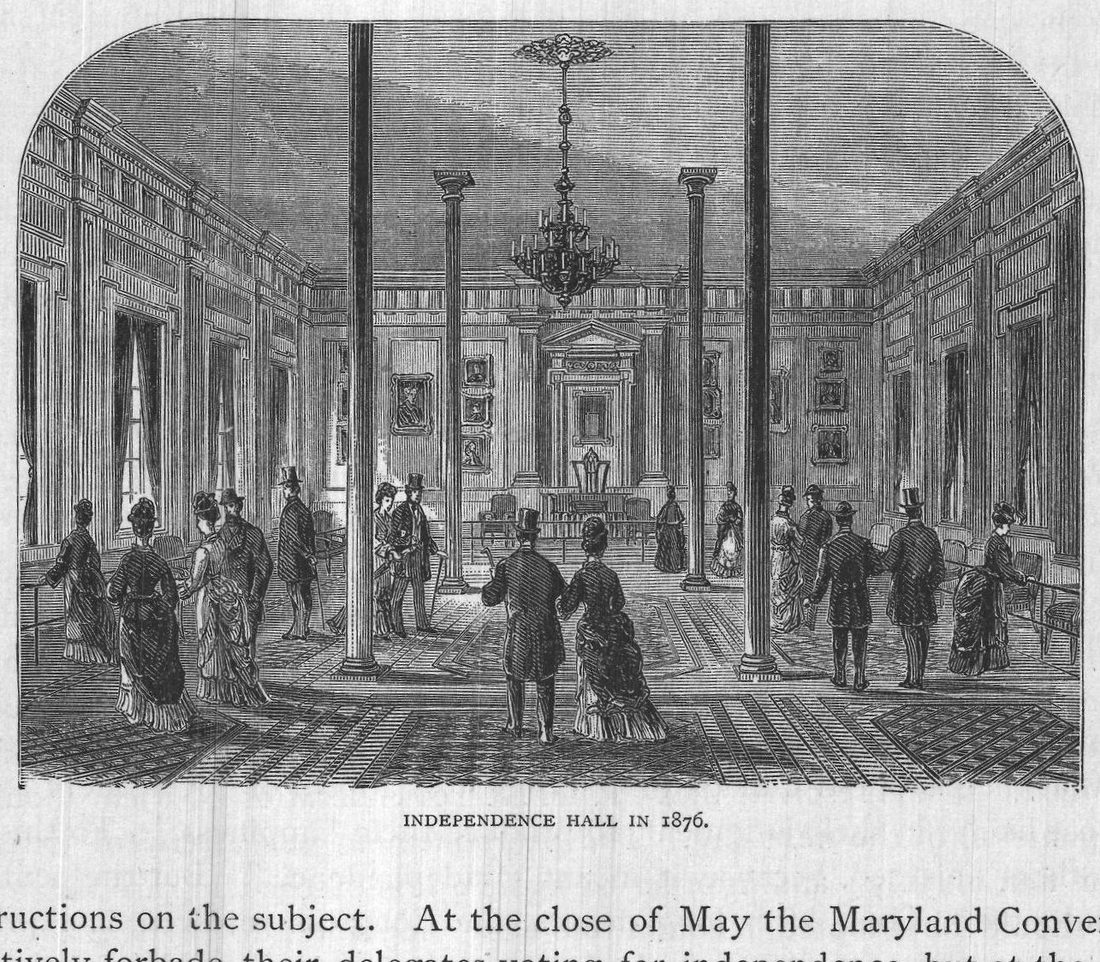
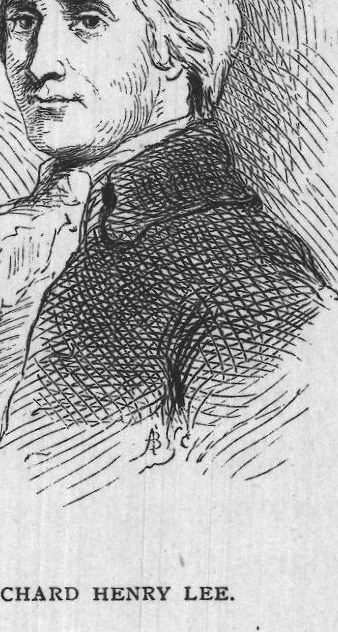
Meanwhile the desire for independence had become a living principle in the Continental Congress, and that principle soon found courageous utterance. On the 10th of May, that body, on motion of John Adams, resolved, "That it be recommended to the several assemblies and conventions of the United Colonies, where no government sufficient to the exigencies of their affairs hath hitherto been established, to adopt such a government as shall, in the opinion of the representatives of the people, best conduce to the happiness and safety of their constitutents in particular, and America in general." This was a bold but cautious step. It was not sufficiently comprehensive to form a basis of energetic action in favor of independence. There was need for some one courageous enough to offer an instrument which should sever the cord that bound the colonies to Great britain. That man would be marked as an arch-traitor, and incur the undying resentment of the royal government. He appeared in the person of Richard Henry Lee, of Virginia, whose constituents had instructed him to "propose" independence; and on the 7th of June, 1776, he arose in his place in the hall of Congress--a spacious room in the State-house at Philadelphia, and ever since known as Independence Hall--and with his clear, musical voice read aloud this resolution:
"That these United Colonics are, and of right ought to be, free and independent States; and that all political connection between us and the State of Great Britain is, and ought to be, totally dissolved."
John Adams instantly seconded the resolution. To shield him, and Mr. Lee, from the ministerial wrath, the Congress, whose sessions were always held with closed doors, directed their secretary to omit the names of the mover and seconder of the resolution, in the Journal; and the entry simply declares that "certain resolutions respecting independence being moved and seconded," it was resolved that the further consideration of them should be postponed until the next day. The postponement was afterward extended to the first of July; and in order to avoid a loss of time, in case the resolution should be adopted, a committee was "appointed to prepare a declaration to that effect." The committee was composed of Thomas Jefferson, John Adams, Benjamin Franklin, Roger Sherman, and Robert R. Livingston. Mr. Lee was not appointed on the committee, because he had been compelled to leave Philadelphia for his home, in consequence of the serious illness of his wife.
The Declaration was fully discussed in committee, and when its topics were settled, the task of putting the whole in proper form was committed to Mr. Jefferson, because he was a colleague of Mr. Lee, and his acknowledged superior in the art of literary composition. At the end of two days he submitted a draft which was adopted unanimously by the committee, after some slight verbal alterations by Adams and Franklin. Debates upon it in Congress were long and animated, for there was not unanimity therein, on the subject. Several amendments were made. Among these was the striking out of a long paragraph, in which the King of Great Britain, in the general indictment, was held responsible for the African slave-trade carried on by the colonies, and the perpetuation of slavery here. The charge was not strictly correct, and a sacred regard for truth caused the clause to be omitted in the indictment.
It was evident from the beginning that a majority of the colonies would vote for independence, but their unanimous consent was most desirable. To secure that result, the friends of the measure bent every effort. The Assemblies of Maryland and Pennsylvania, as we have seen, had refused to sanction it, and Georgia, South Carolina, and New York remained silent. The delegates from Maryland were all in favor of it; those from Pennsylvania were divided. At length, on the 24th of June, the people of Pennsylvania, in a convention held at Philadelphia, consented to "concur in a vote of Congress, declaring the United Colonies free and independent States;" and by the unwearied exertions of Chase, Carroll and other delegates from Maryland, the Convention of that province, on the 28th of June, recalled their former instructions and empowered their representatives to concur with the other colonies in a Declaration of Independence. So the most important obstacles in the way of unanimity were removed; and when a vote was taken in the committee of the whole House on Mr. Lee's resolution, on the 2d of July, all the colonies voted for it excepting Pennsylvania and Delaware, four of the seven delegates from the former voting against it, and the two delegates from Delaware, who were present, being divided--Thomas McKean favouring it, and George Read opposing it.