The Armies at Marietta: Alabama and Mobile
In the meantime, General Thomas had been reinforced by troops under General A. J. Smith, who had been driving Price out of Missouri. Hood's cavalry was superior to that of Thomas in numbers, and the latter kept the invaders in front of Nashville as long as possible, to enable him to collect there horses and means for transportation. Finally, at the middle of December, the Nationals moved upon the Confederates. The Fourth corps, led by General T. J. Wood, attacked them vigorously and drove them back to the foot of the Harpeth Hills. The next day (December 16) the same troops and others advanced, and after a severe battle, the invaders were sent flying southward with great precipitation and much confusion, and were closely pursued several days, Hood turning to fight occasionally. At the close of the month, Hood, with his shattered army covered by Forrest's cavalry, escaped across the Tennessee, and he became no longer formidable. In the course of four months, Thomas had made eleven thousand five hundred Confederates prisoners of war, and captured seventy-two pieces of artillery. His own loss was about ten thousand men, or less than one-half that of his antagonists.
At the beginning of 1864, Confederate cruisers on the ocean had captured one hundred and ninety-three American merchant-ships, whose aggregate cargoes were valued at over $13,400,000. We have already noticed the depredations of the Alabama. Another rover, called the Sumter, after a short but destructive career, was blockaded and sold at Gibraltar, early in 1862. The Florida and Georgia, both built in Great Britain, captured and destroyed scores of ships; and in 1864, British ship-yards furnished three other formidable cruisers for the use of the Confederates, in spite of the remonstrances of the American minister (Charles Francis Adams) in London.
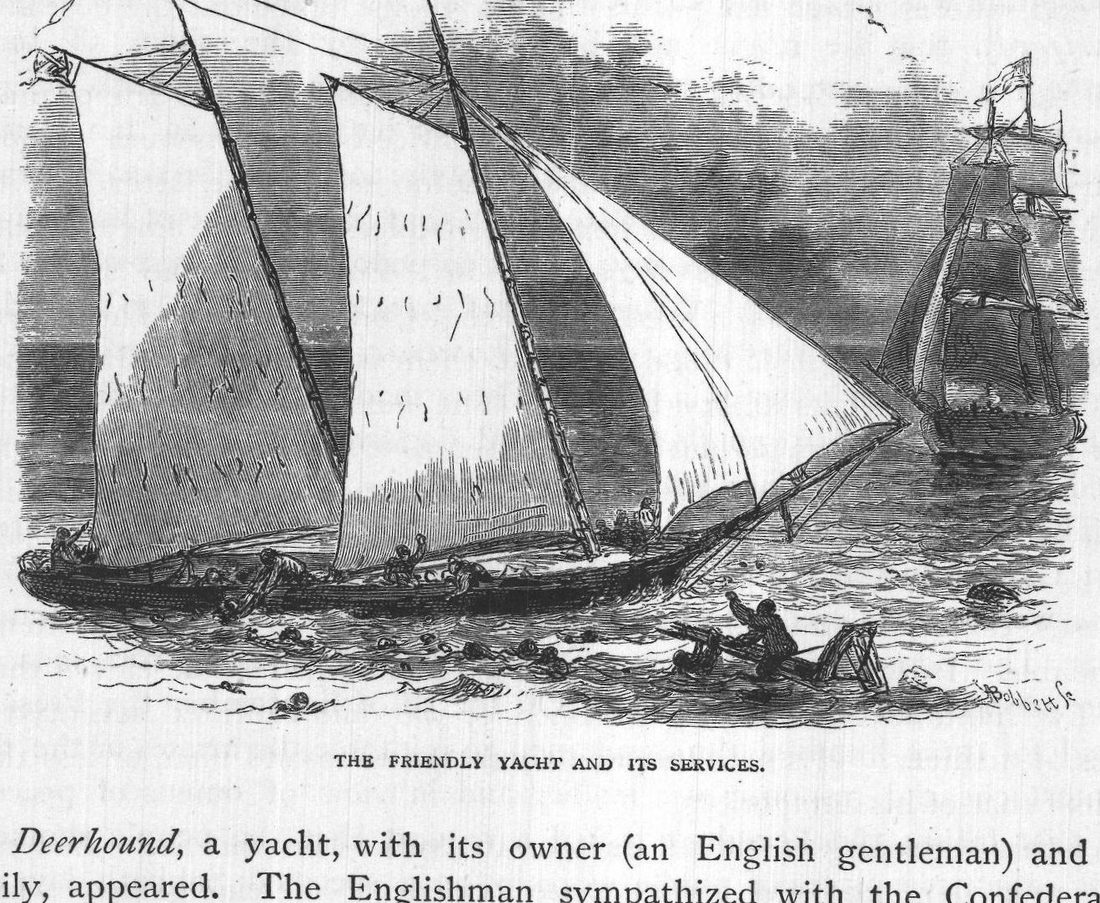
The Alabama was the most formidable of them all. She was commanded by Captain Raphael Semmes, a native of Maryland, who died in August, 1877, in the sixty-ninth year of his age. She continued her depredations on the high seas, eluding the Government vessels until the 19th of June, 1864, when she encountered the Kearsarge, Captain John A. Winslow, off the port of Cherbourg, France. They fought desperately for an hour, when the Alabama, badly bruised, began to sink. Her flag was struck, and twenty minutes afterward she went to the bottom of the sea, leaving her commander and his crew struggling for life in the water. At that moment the Deerhound, a yacht, with its owner (an English gentleman) and his family, appeared. The Englishman sympathized with the Confederates, and went out from Cherbourg ostensibly to see the contest, but really to bear away Semmes and his officers from the grasp of the Nationals should misfortune befall them. These officers, with a few of the crew, were rescued by the yacht and borne in safety to England, where the commander of the Alabama was honored with a public dinner (at Southampton); and Admiral Anson, of the royal navy, headed a list of subscribers to a fund raised for the purchase of an elegant sword to be presented to Semmes as a token of sympathy and esteem. The "common people" of the Alabama were saved by the boats of her antagonist, and some French vessels.
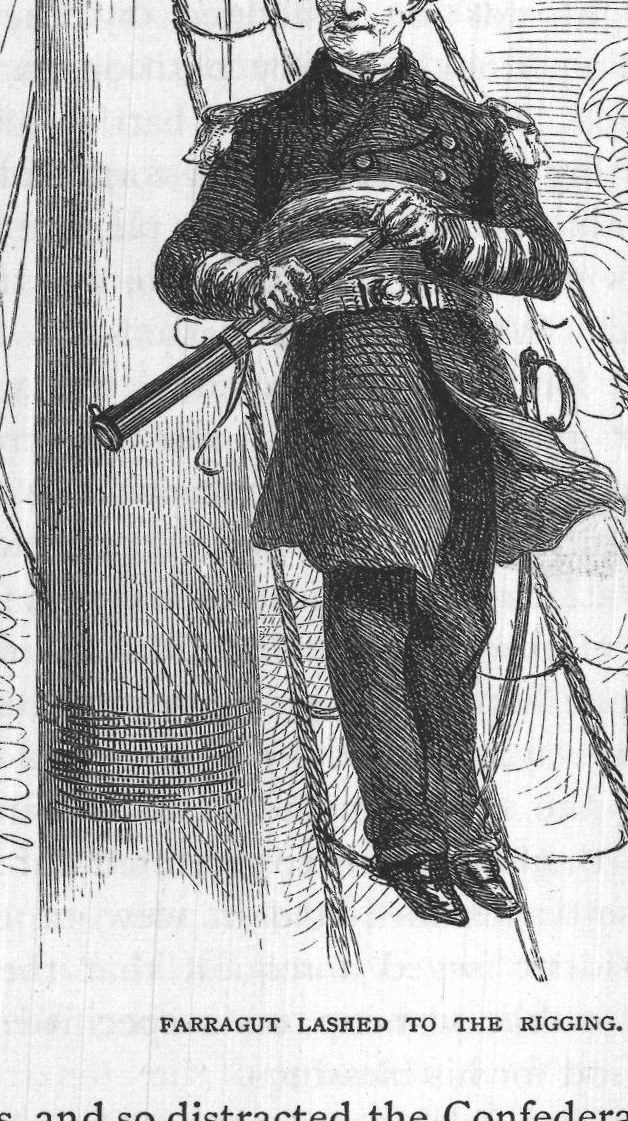
The news of Winslow's victory was received with joy by the friends of the Government; and it was determined to close the ports of Wilmington and Mobile, the only ones open to blockade-runners. For that purpose Admiral Farragut appeared off the entrance to Mobile (August 5, 1864) with a fleet of eighteen vessels, four of them iron-clads. Five thousand troops under General Gordon Granger had been sent by General Canby from New Orleans, to co-operate with the fleet. The latter (the wooden vessels lashed together in couples) sailed in between the two forts that guarded the entrance--Fort Morgan on the main and Fort Gaines on Dauphin Island. In order to have a general oversight of all the movements, the admiral was fast-bound to the rigging at the maintop of his flag-ship (Hartford), that he might not be dislodged by the shock of battle. Through a tube extending from his lofty position to the deck, he gave orders clearly in the midst of the uproar of battle; and in that perilous situation he remained during the passage by the forts and the severe conflict with Confederate vessels that followed. In that passage one of his iron-clad gun-boats (Tecumseh) was destroyed by a torpedo, but the rest of the fleet was only slightly bruised. When he had passed the forts, a formidable "ram," two hundred feet long, named Tennessee, was seen coming swiftly down the bay with other gun-boats. These made a ferocious dash at the fleet; but after a sharp conflict, brief and decisive, the Tennessee was captured and victory remained with the Nationals.
The forts were now attacked by land and water, and were captured--Fort Gaines on the 7th of August, and Fort Morgan on the 23d. With these were surrendered one hundred great guns and over fourteen hundred men. The port of Mobile was effectually closed, and vigorous measures were adopted for ending the war. On the 3d of September the President called for three hundred thousand men to reinforce the armies in the field. A most cheerful response was made; and in view of omens of peace in the near future, the President issued a request that the people should, in their respective places of public worship, on a specified Sabbath-day, offer united thanksgivings to God for his blessings.