The Americans Resolve to Resist
AT the beginning of 1768, the Americans, educated by a long series of moral and political contests with the government of Great Britain, and assured by recent experience and observation of their own sound and potent physical and moral strength derived from numbers and the justice of their acts, stood in an attitude of firm resolve not to submit to the new schemes of the ministry for their enslavement. They were determined to maintain home rule inviolate in their political affairs, yet they were willing to bear with patience the pressure upon their industrial enterprise of old acts of Parliament then unrepealed. They were still eminently loyal, and were proud of the honor of being British subjects in its broad sense of nationality. But to the eye of a superficial observer the Americans, at that time, were in a state of open revolt. Their representative assemblies, uttering the voices of the people, were defying the power of Great Britain which threatened to impose unjust and unconstitutional laws upon them, and to enforce them with ball and bayonet. The nonimportation agreements, working disastrously against British commerce, were again in full force; and the spirit of resistance was rife among the people.
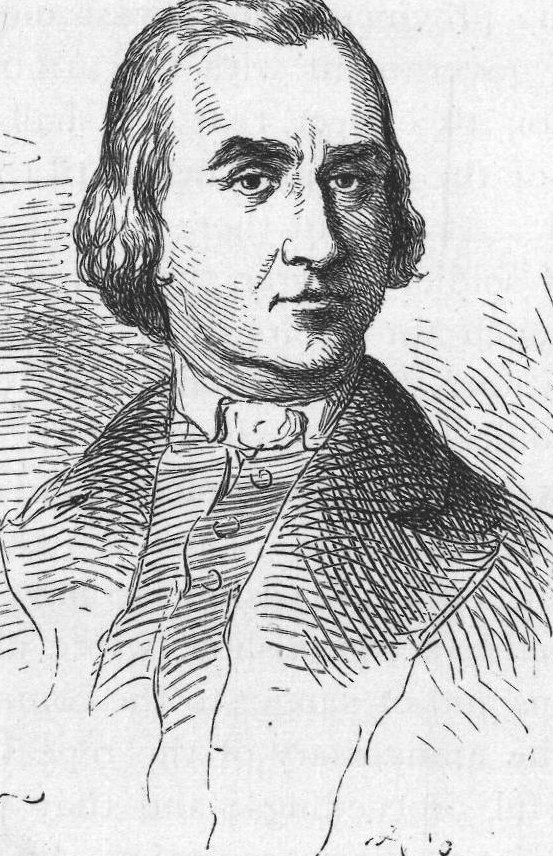
But the leaders of American opinion, deprecating the spasmodic violence seen in opposition to the stamp act, counselled moderation, and condemned any but legal, just, and dignified measures. They saw that a crisis was at hand, when statesmanship of the highest order would be needed in the popular representative assemblies, and wise and judicious men were wanted as popular leaders of the people. When, in Boston, a placard appeared, calling on the "Sons of Liberty" to "rise and fight for their rights," and declaring that they "would be joined by legions," James Otis, in a town-meeting, denounced that spirit. "Were the burdens of the people ever so heavy," he said, "or their grievances ever so great, no possible circumstances, though ever so oppressive, could be supposed sufficient to justify private tumults and disorders, either to their consciences before God or legally before men; that their forefathers, in the beginning of the reign of Charles I, for fifteen years together, were continually offering up prayers to their God, and petitions to their king, for redress of grievances, before they would betake themselves to any forcible measures; and to insult and tear each other in pieces was to act like madmen." John Dickinson wrote: "Our cause is a cause of the highest dignity; it is nothing less than to maintain the liberty with which Heaven itself has made us free. I hope it will not be disgraced in any colony by a single rash step. We have constitutional methods of seeking redress, and they are the best methods." Like sentiments were expressed by other patriotic leaders; and their advice to stand in an attitude of defence and not of aggression- to make the king and his ministers the real revolutionists if revolution should occur-was heartily endorsed by the people. It was a new, a benign, and a thoroughly American method of resisting the oppressions of an imperial government- a method having its foundations on law, enlightened public opinion, and social order.
Had the king and his ministers been wise, and simply respected the natural and chartered rights of the colonists, the climax of revolution toward which events were rapidly tending might have been indefinitely postponed. But they were not wise. The pride of power would not brook resistance or even opposition to its wishes and its will. The three estates of the realm-King, Lords, and Commons-esteeming themselves collectively the absolute masters of America, resolved to teach the colonists that implicit obedience was their birthright and their natural and legal tribute to that master. Leaning upon the acknowledged power of Great Britain to execute the will of the King and Parliament in America, that government resolved to effect a thorough revolution in the colonial governments by military force; to establish a vast consolidated empire under absolute royal rule, and to lay the foundations of a great American revenue. When the suggestion was made to Charles Townshend that the troops might be safely withdrawn from America, and by so lessening the expenses might lessen the need of a revenue and causes for discontent, the imperious minister replied: "I will hear nothing on that subject; the moment a resolution shall be taken to withdraw the army, I will resign my office and have no more to do in public affairs. I insist it is absolutely necessary to keep up a large army there and here. An American army and consequently an American revenue are essential."