Stamp Act Passed
Colonel Barre, who had shared with Wolfe the dangers and fatigues of the campaign against Quebec, and who, having lived in America, knew the people well, instantly sprang to his feet, and with eyes flashing with indignation, and with outstretched arms, delivered an unpremeditated phillippic of extraordinary power, in which most wholesome truths were uttered. He exclaimed with scorn: "They planted by your care! No, your oppressions planted them in America. They fled from your tyranny to a then uncultivated and inhospitable country, where they exposed themselves to almost all the hardships to which human nature is liable, and among others to the cruelties of a savage foe the most subtle, and I will take upon me to say the most formidable, of any people on the face of God's earth; yet, actuated by principles of true English liberty, they met all hardships with pleasure compared with those they suffered in their own country from the hands of those who should have been their friends. They nourished up by your indulgence! They grew by your neglect of them. As soon as you began to care about them, that care was exercised in sending persons to rule over them in one department and another, who were, perhaps, the deputies of deputies of some member of this House, sent to spy out their liberties, to misrepresent their actions, and to prey upon them-men whose behavior on many occasions has caused the blood of those Sons of Liberty to recoil within them-men promoted to the highest seats of justice; some who, to my knowledge, were glad, by going to a foreign country, to escape being brought to the bar of justice in their own. They protected by your arms! They have nobly taken up arms in your defence; have exerted a valor amid their constant and laborious industry, for the defence of a country whose frontier was drenched in blood, while its interior parts yielded all its little savings to your emoluments. And believe me-remember I this day told you so-that the same spirit of freedom, which actuated that people at first, will accompany them still; but prudence forbids me to explain myself further. God knows that I do not at this time speak from motives of party heat; what I deliver are the genuine sentiments of my heart. However superior to me in general knowledge and experience, the respectable body of this House may be, I claim to know more of America than most of you, having seen and been conversant in that country. The people, I believe, are as truly loyal as any subjects the king has; but a people jealous of their liberties, and who will vindicate them if ever they should be violated. But the subject is too delicate. I will say no more."
The House remained in silent amazement for a few moments after this impassioned utterance of truths. The members were generally too ignorant of America and its people to comprehend Barre's speech. The intelligent Horace Walpole confessed that he knew almost nothing about the colonists. The members of the House knew that Great Britain was strong and believed the colonies were weak; and without being "merciful," as Beckford had suggested, they passed the obnoxious bill on the 27th of February by a vote of two hundred and fifty against fifty. In the Lords it received very little opposition, and on the 22d of March, the king made it a law by signing it. A few days afterward the monarch was crazy. It was the first of four attacks of the dreadful malady of insanity which afflicted him during his long life, and finally deprived him of the power to rule.
So was produced the principal wedge which cleaved asunder the British empire. The infatuated ministry openly declared that it was "intended to establish the power of Great Britain to tax the colonies." On the night of the passage of the act, Dr. Franklin wrote to Charles Thompson, afterward the Secretary of the Continental Congress: "The sun of liberty is set; the Americans must light the lamps of industry and economy."
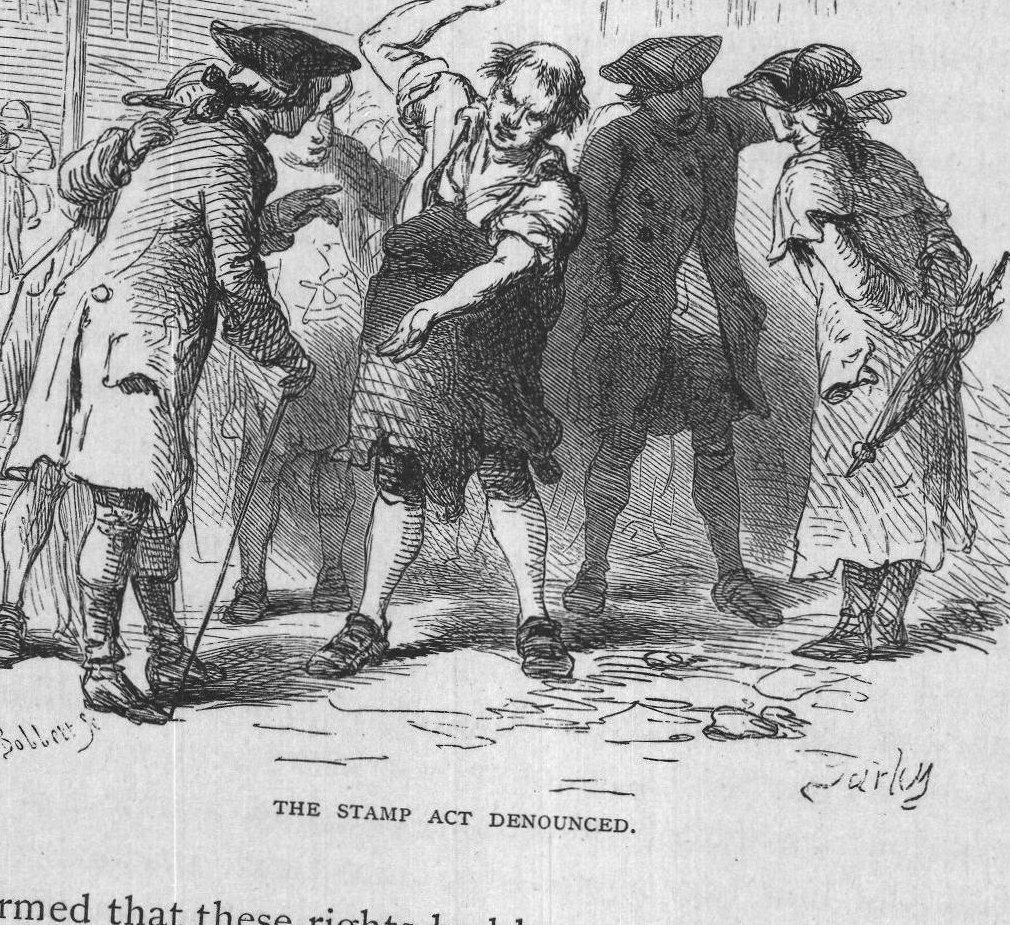
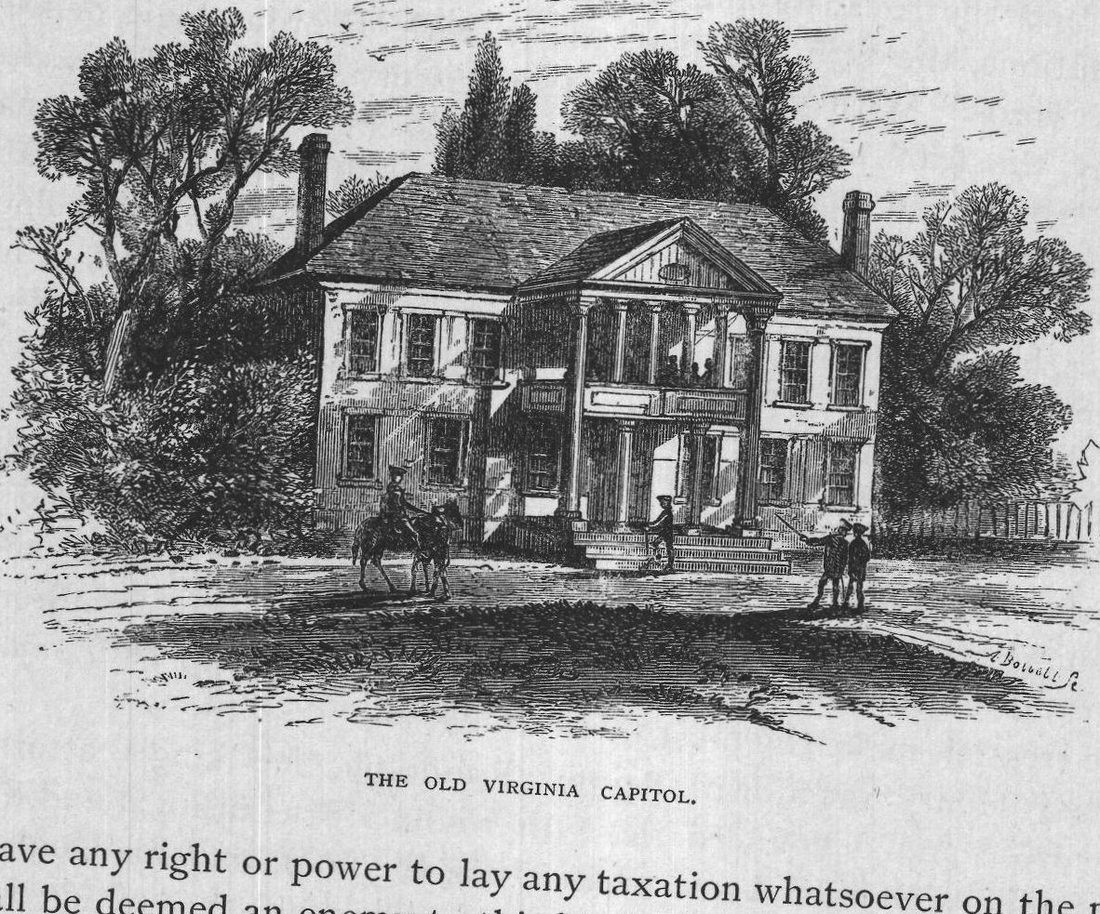
News of the passage of the stamp act, and a report of Barre's speech by Ingersoll, the half tory agent of Connecticut, reached the colonists at the same time. The former excited the hot indignation of the people; the latter was applauded, printed, and sent broadcast over the land. Barre's title of Sons of Liberty, given to the patriots, was eagerly adopted, and the name soon became familiar on the lips of Americans. Everywhere the act was denounced. The people in villages and cities gathered in excited groups and boldly expressed their indignation. The pulpit thundered condemnation and defiance in the name of a righteous God; at public gatherings the orators denounced it; the newspapers teemed with seditious essays, and the colonial assemblies rang with rebellious utterances. Among the foremost of those who boldly denounced the act in almost treasonable language was Patrick Henry, then about twenty-nine years of age. He had lately been elected a member of Virginia House of Burgesses, who were in session at that time in the old Capitol at Williamsburg. When the news was published to that body by the Speaker, a scene of wild excitement ensued. Henry calmly tore a blank leaf from an old copy of Coke upon Littleton, on which he wrote five resolutions and submitted them to the House. The first declared that the original settlers brought with them and transmitted to their posterity all the rights enjoyed by the people of Great Britain.