Signing It and its Ratification
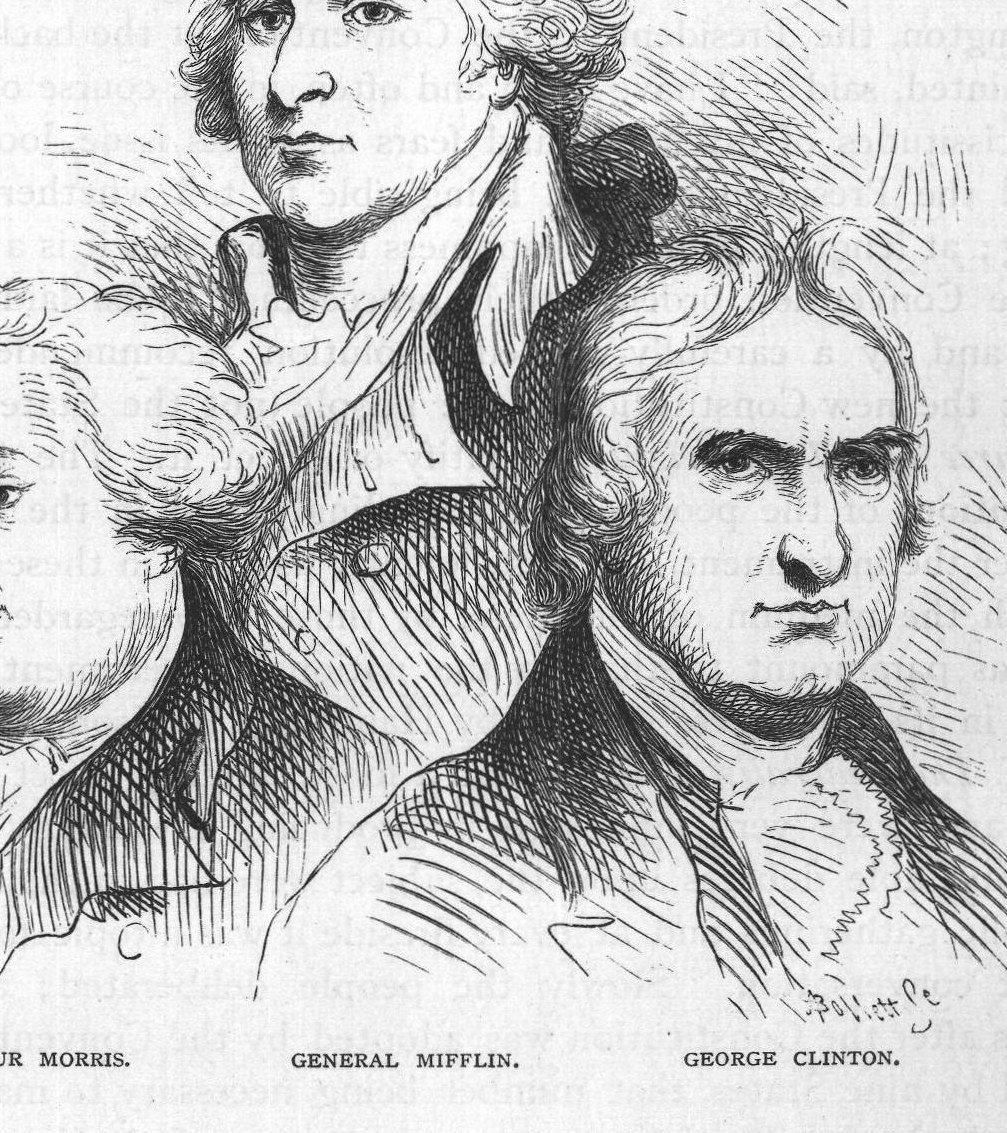
The Convention ordered their proceedings to be laid before the Congress, and by a carefully-worded resolution recommended that body to submit the new Constitution to the people (not the States), and ask them, the source of all sovereignty, to ratify or reject it. The Congress did so. Conventions of the people were accordingly held in the several States, to consider the instrument. It was violently assailed in these conventions and through the medium of the press, by those who regarded allegiance to a State as paramount to that to the national government; while powerful essays in its favor were written by Hamilton, Madison and Jay, under the title of The Federalist. These had a most salutary effect upon the public mind, and were very influential in producing the happy result obtained. Long and able debates upon the subject were had in the conventions; and at public gatherings and at every fireside it was a topic for discussion and earnest conversation. Slowly the people deliberated; and it was nine months after the Constitution was adopted by the Convention before it was ratified by nine States, that number being necessary to make it the organic law of the land. The following are the names of the delegates who signed the Constitution, and the order of their signatures: George Washington, of Virginia, President; John Langdon and Nicholas Gilman, of New Hampshire; Nathaniel Gorham and Rufus King, of Massachusetts; Wm. Samuel Johnson and Roger Sherman, of Connecticut; Alexander Hamilton, of New York; William Livingston, David Brearley, William Paterson and Jonathan Dayton, of New Jersey; Benjamin Franklin, Thomas Mifflin, Robert Morris, George Clymer, Thomas Fitzsimmons, Jared Ingersoll, James Wilson, Gouverneur Morris, of Pennsylvania; George Read, Gunning Bedford, Jr., John Dickinson, Richard Bassett and Jacob Brown, of Delaware; James McHenry, Daniel-of-St.-Thomas Jenifer and Daniel Carroll, of Maryland; John Blair and James Madison, of Virginia; William Blount, Richard Dobbs Spaight, Hugh Williamson, of North Carolina; John Rutledge, Charles Cotesworth Pinckney, Charles Pinckney and Pierce Butler, of South Carolina; and William Few and Abraham Baldwin, of Georgia.
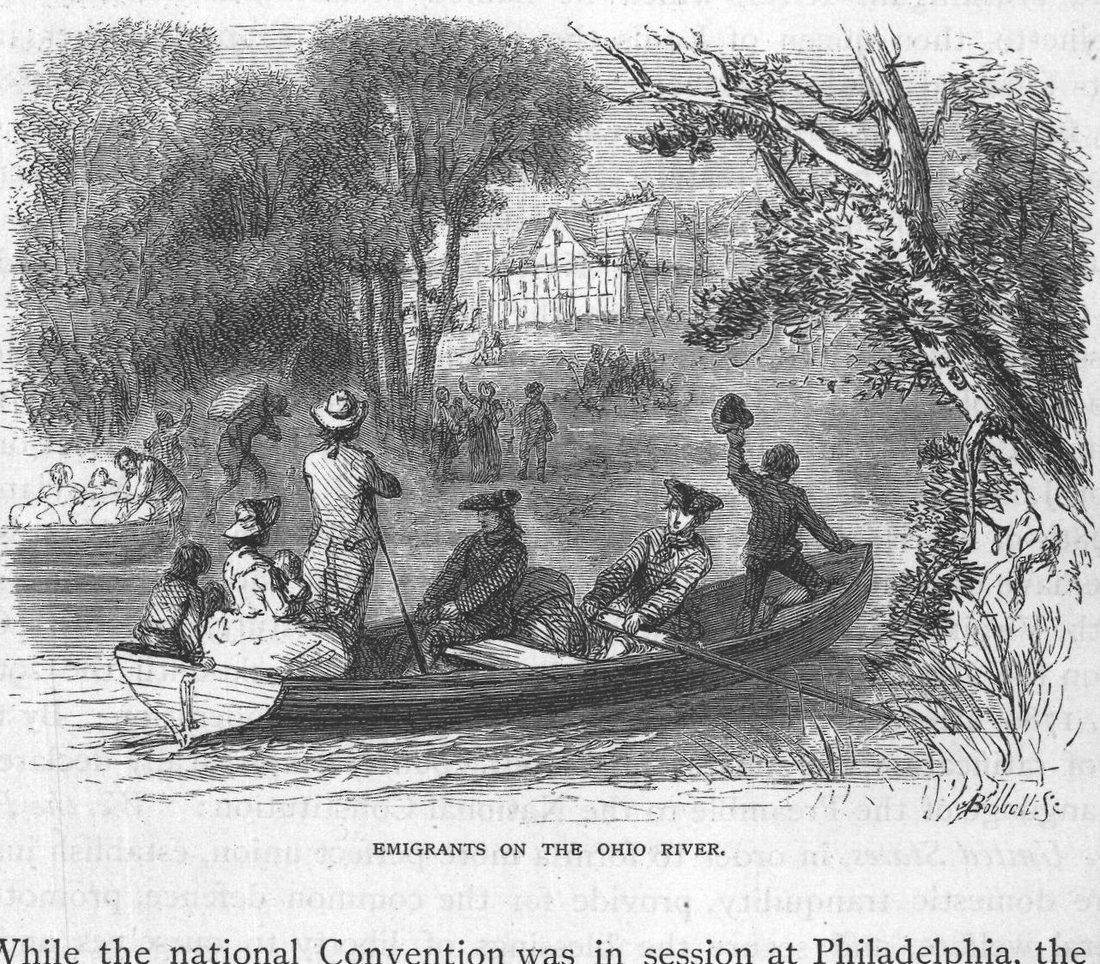
While the national Convention was in session at Philadelphia, the Continental Congress, feeble and dying, were sitting at New York, with only eight States represented; but they performed a very important work at midsummer. By treaties with the principal Indian tribes between the Ohio River and the Great Lakes, the aboriginal titles to seventeen million acres of land in that region had been extinguished. This act, with that of the cession of Virginia to the United States of all its claims to lands in that region, put the general government in actual possession of a vast country out of which several flourishing States have been formed. The Congress, by unanimous vote on the 13th of July, 1787, adopted an "Ordinance for the Government of the Territory of the United States northwest of the Ohio." It provided, among other things, that there should be "neither slavery nor involuntary servitude in the said Territory otherwise than in the punishment of crime whereof the party shall have been duly convicted." The existence of these conditions in the "Northwestern Territory," as the country was now called, created a mighty stream of emigration to flow down the western slopes of the Alleghany Mountains into the Ohio Valley. The first settlement founded there by Europeans (excepting by Moravian missionaries) was seated by General Rufus Putnam and others, at the mouth of the Muskingum River, which he named Marietta, in honor of Marie Antoinette, then queen of Louis the Sixteenth of France. Other immigrants followed; and it has been estimated that during the years 1788 and 1789, full twenty thousand men, women, and children went down the Ohio in boats to settle near its banks. Since then, how wonderful has been the growth of the empire beyond the Alleghany Mountains.
On the 21st of June, 1788, the New Hampshire convention ratified the new Constitution. This completed the sanction of the number of States necessary to make it the organic law of the country. Delaware ratified it on the 7th of December, 1787; Pennsylvania on the 12th, and New Jersey on the 18th of the same month; Georgia on the 2d, and Connecticut on the 9th of January, 1788; Massachusetts on the 6th of February; Maryland on the 28th of April; South Carolina on the 23d of May, and New Hampshire, as we have observed, on the 21st of June, 1788. On the 26th of the same month, Virginia ratified it; New York on the 26th of July, and North Carolina on the 21st of November. Rhode Island held back until the 29th of May, 1789, after the new government had gone into operation. By these acts of ratification, the inhabitants of our country emphatically declared, in the language of the Preamble to the National Constitution: "We, the People of the United States, in order to form a more perfect union, establish justice, insure domestic tranquility, provide for the common defence, promote the general welfare, and secure the blessings of liberty to ourselves and our posterity, do ordain and establish this Constitution for the United States of America." In accordance with the provisions of that Constitution, the people of the States wherein it had been ratified chose Presidential electors. These formed the first Electoral College, and on the first Wednesday in February, 1789, they chose George Washington, President, and John Adams, Vice President of the United States. On the 4th of March following, the first Congress under the new order of things began their first session, when the Continental Congress--the representative of the League--officially expired.