President Polk
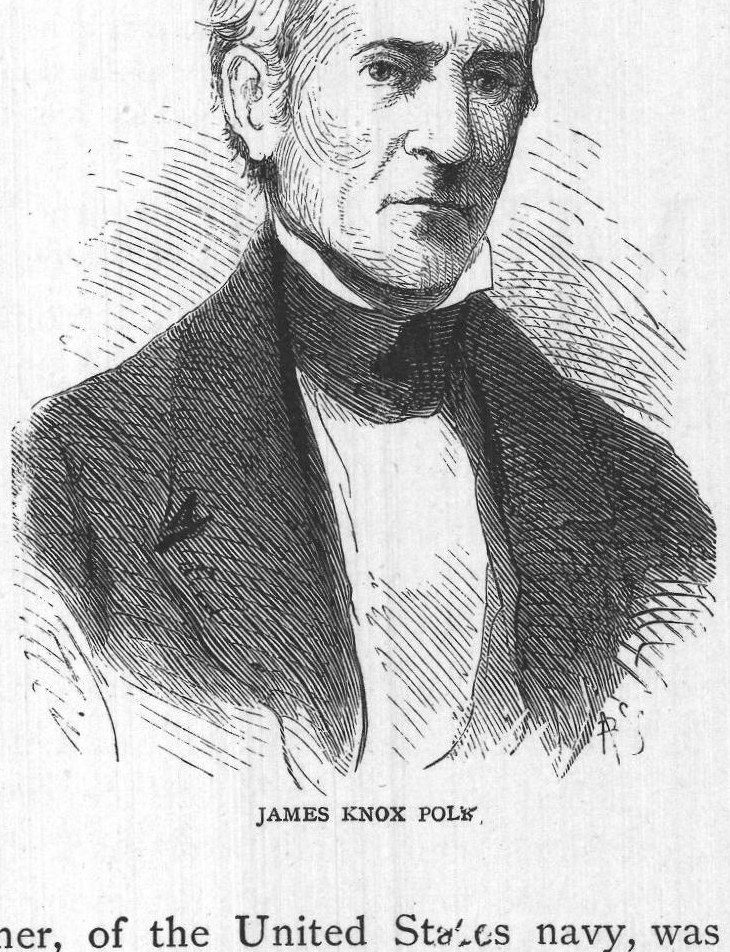
MR. POLK, the eleventh President of the United States, was a native of North Carolina, but was a citizen of Tennessee from early childhood; and from 1825, when he was thirty years of age, he was almost constantly a representative of that State, in Congress, until he was elected to the Presidency, a period of twenty years. He entered upon the duties of that high office at a critical period in the history of our country, for it was on the verge of a war with the sister republic of Mexico, chiefly on account of the annexation of the revolted province of Texas, the independence of which had been acknowledged by the United States, France and England, and which that State had maintained nine years.
The friendship between the United States and Mexico had been extinguished some years before the annexation of Texas, because of repeated aggressions which had been made by the many succeeding rulers of our unfortunate neighbor, against the property of American citizens on the soil of that country or on vessels on the Gulf of Mexico. Redress had been frequently sought in vain. Our government generously forbore to use its power because Mexico was weak and distracted, and the latter seemed to consider that forbearance as an evidence of cowardice. Our government claimed six million dollars for spoliations of American property; Mexico acknowledged two million as a just claim, but after repeated postponements of the payment of this amount, the government of Mexico virtually refused to settle the claim. This conduct alienated the confidence and respect of our government and people for Mexico; and yet, in all the discussions concerning the annexation of Texas, propositions were made with special reference to the good faith of treaties made with Mexico. That government, conscious of its inability to hold Texas, had offered to acknowledge its independence, provided it would not become annexed to our Union. Such was the situation when the joint resolution providing for the annexation of Texas was adopted by both Houses of Congress on the 28th of February, 1845, and was signed by President Tyler on the first day of March.
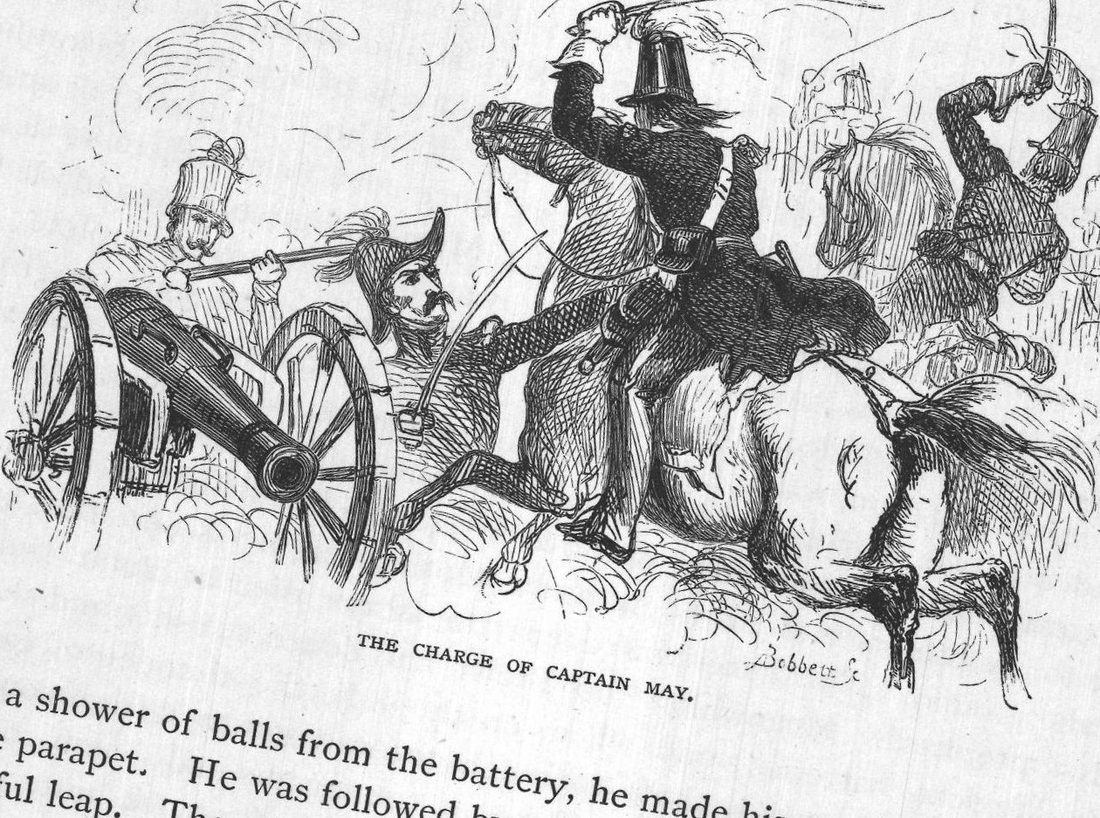
Two days after the inauguration of President Polk, General Almonte, the Mexican minister at Washington, asked and received his passports, and diplomatic relations between the governments ceased. The President of Mexico, Herrera, issued a proclamation in June following, declaring that the annexation of Texas in no wise destroyed the rights of Mexico, and that they would be maintained by force of arms. Both governments prepared for war when, on the 4th of July, 1845, Texas became a State of our Union. Satisfied that war was inevitable, President Polk ordered brevet Brigadier-General Zachary Taylor, then in command of national troops in the southwest, to enter Texas and take a position as near the Rio Grande as prudence would allow. His little force of fifteen hundred men were called an "Army of Occupation" for the defence of the newly-acquired State.
At the same time Commodore Conner, of the United States navy, was sent with a strong squadron into the Gulf of Mexico to protect American interests in that region, ashore and afloat.
At that time, Santa Anna was an irritated exile in Cuba, having been banished from Mexico for ten years, and President Polk made a secret bargain with him for the betrayal of his country into the hands of the government of the United States. The plan that was agreed upon was simple. The President was to send a strong force toward the frontier of Mexico. Santa Anna was to go into his own country, where an army gathered near that frontier would be sure to "pronounce" for him as their leader, and then the war was to begin. The President was to furnish a force sufficient to give Santa Anna a decent excuse for surrendering his army to it; and so the Americans might easily take possession of Mexico. For this important act Santa Anna was to receive a very large sum of money from the secret service fund in the hands of the President. The Army of Occupation or Observation, as it was alternately called, was sent into Texas, as we have seen, and A. Slidell McKenzie, of the United States navy, was sent to Cuba to perfect the arrangement with Santa Anna, who was living a few miles from Havana. Instead of going secretly to the retreat of the exile, the vain McKenzie, dressed in the full uniform of our naval officers, entered a volante in Havana, at noon-day, and in sight of all the people rode out to the dwelling-place of Santa Anna. This fully disconcerted the whole plan. After this public visit from an officer of our navy, the exile could not fulfill his bargain in Mexico, for the act would make his treason palpable.