Pitt's Great Speech
Pitt then proposed an absolute, total and immediate repeal of the stamp act, at the same time declaring the absolute sovereignty of Great Britain over the colonies. His proposition was warmly seconded, and Edmund Burke, then thirty-six years of age and who was sitting in Parliament for the first time, made two remarkable speeches in favor of repeal. They were so logical and brilliant in expression, that he immediately took a front rank among the orators of the House of Commons. A repeal bill was introduced, and on the 18th of March it was passed by the House by a large majority. It was accompanied by Pitt's declaratory act, so called, which affirmed the right of Parliament "to bind the colonies in all cases whatsoever"--an act intended by the great statesman to soothe the feelings of some who might, by their votes, defeat the repeal bill. In the House of Lords it was stoutly opposed as a relinquishment of the sovereign power of the government. Lord Camden was favorable to repeal, but he was opposed to the declaratory act. Planting himself firmly on the maxim that taxation without representation is tyranny, "I will maintain it to the last," he said. "The position is founded in the law of nature. It is more; it is, itself, an eternal law of nature." On the day of its enactment (March 18), the repeal act became a law by receiving the reluctantly-given signature of the king.
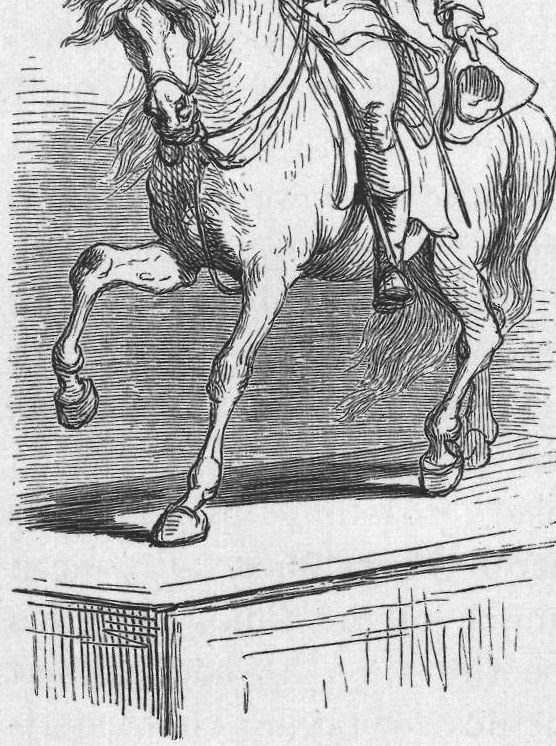
The repeal of the stamp act produced great joy in England and America. In London the event was celebrated by bonfires and illuminations. The merchants had sweet dreams of reviving trade with the Americans. To Pitt was ascribed all the honor of the measure, and he was idolized. When he left the lobby of the House of Commons, the populace gathered around him with the most extravagant demonstrations of joy. The aristocracy, on the other hand, were offended and alarmed. "The king is made to bow to subjects," they said. "British power is set at naught; the foundation of the British empire is sapped." Pitt was lampooned and caricatured as a demagogue seeking popularity. One of the pictures entitled "The Colossus," represents Pitt raised on very lofty stilts, his gouty leg resting on the Royal Exchange in London, which is surrounded by bubbles inscribed "War," "Peace," etc. This stilt is called "Popularity." The other, called "Sedition," he stretches over the sea toward New York, seen in the distance, and fishing for popularity in the Atlantic Ocean. He rests on a long staff entitled "Pension." Above Pitt's head hangs the broad hat of the commonwealth; and in the air, on one side, is seen Lord Temple occupied in blowing bubbles which support the "great Commoner's" fame. This picture, and the lines below which accompanied it, show the spirit of that day:
Whose wooden leg is in de city,
Eh bien drole, 'tis de great pity.
Doodle doo.
De while St. Stephen's throng are throbbing.
One crutch in America is bobbling.
Doodle doo.
Building de castle in de air, sir?
Oh! 'tis de Temple one may swear, sir!
Doodle doo.
Dat stampt it in de stilt-man's nob, sir,
To be America's nabob, sir.
Doodle doo.
For de French dey make de Pit, sir,
'Tis a pit for dem who now are hit, sir.
Doodle, noodle, doo."
Equal joy was manifested in America, when news of the repeal came over the Atlantic. Pitt, the King, and the Parliament shared in the honors of congratulatory cannon-peals, oratory, bonfires, illuminations, and great meetings of citizens. In Boston, the Sons of Liberty gathered under the Liberty-Tree and adopted the most laudatory resolutions concerning the immediate participants in the measures that brought about the repeal. A day was set apart for celebrating the event. The dawn was ushered in by the roar of artillery and the ringing of bells. John Hancock, a leading patriot and wealthy merchant of Boston, opened a pipe of wine in front of his fine mansion on Beacon street; and at the suggestion of "a fair Boston nymph," the liberal citizen raised funds and ransomed and set at liberty every prisoner for debt in the jail of the New England metropolis, that they might participate in the general joy. All the great houses were illuminated, and many feasts were given. The local government dined at the Province House, where many loyal toasts were drank. Past animosities were forgotten, and the 16th of May, 1766, was a happy day in Boston.