Operations at Concord
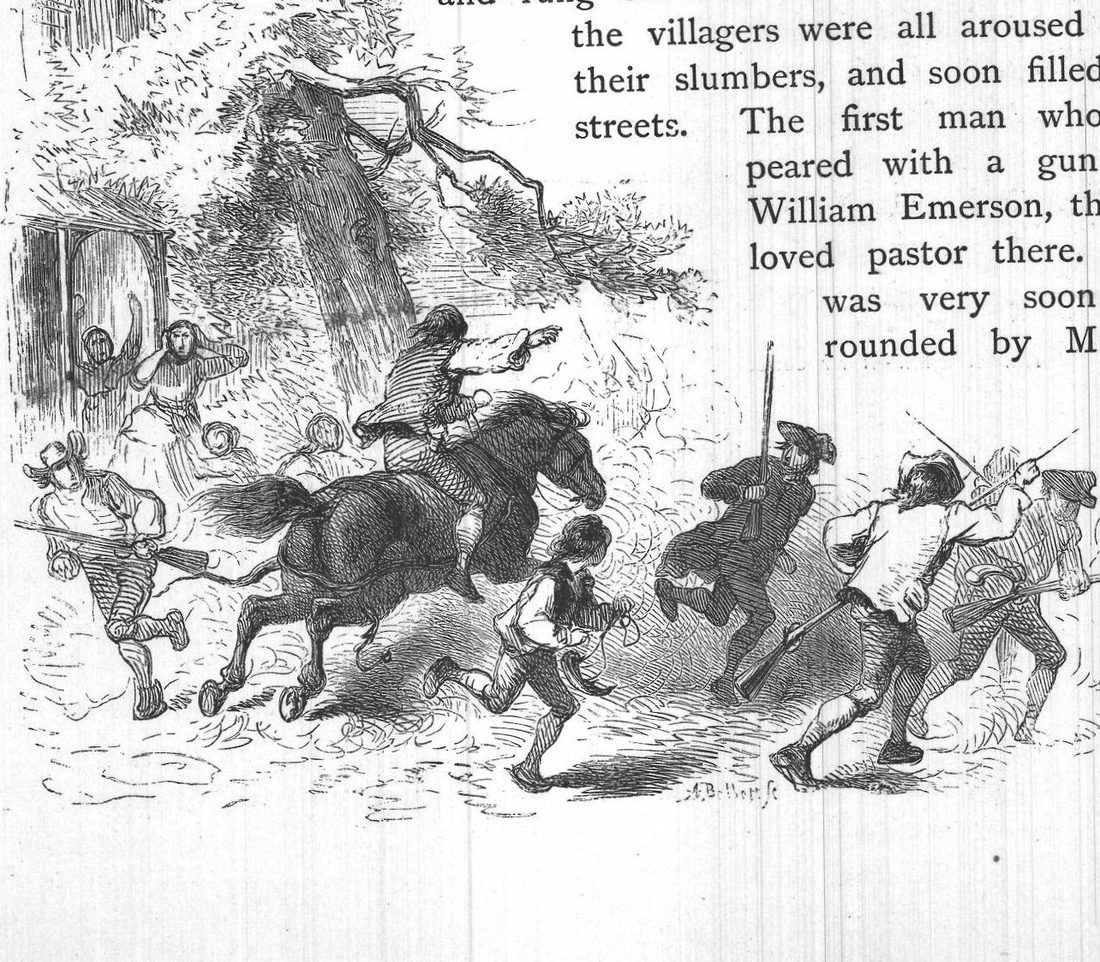
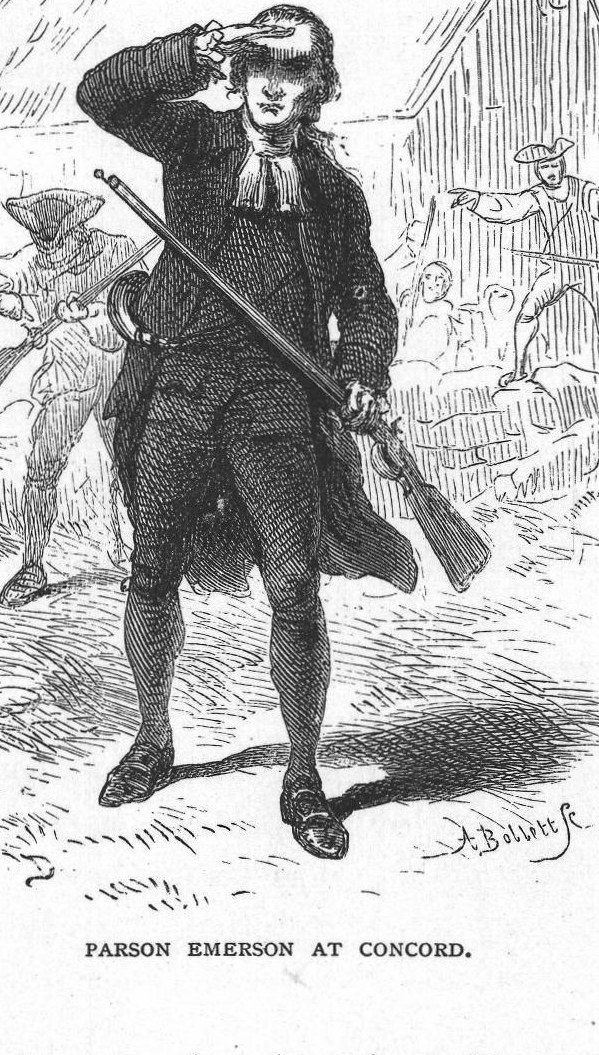
CONCORD had been aroused. Dr. Prescott had reached the town twenty minutes after he left Revere and Dawes in the hands of their captors. He told Amos Melvin, the sentinel at the Court-house, that the regulars were coming. It was then about two o'clock in the morning of the 19th of April, 1775. That scion of a heroic family, who had battled with the French and Indians in recent wars, seized the bell-rope and rung out such a vehement alarm that the villagers were all aroused from their slumbers, and soon filled the streets. The first man who appeared with a gun was William Emerson, the beloved pastor there. He was very soon surrounded by Minute-men on the Green; and when the guns at Lexington were heard before sunrise, the Committee of Safety and the principal people of the town had assembled for consultation. They soon made arrangements for the reception of the invaders. Couriers had been sent to the neighboring towns to stir up the people; and the men, women and children of Concord engaged vigorously in the removal of the cannon and stores to a place of safety. "I was then a lad fourteen years old," said the venerable Major James Barrett to me in 1848, when he was eighty-seven years of age. "I could not carry a musket, but I could drive oxen. Stout men and women would load carts with stores, and then boys and girls of my age would go, one on each side of the oxen, with long goads, and whip them into a trot, and so we carried away the stores, and hid them under pine boughs before the British regulars appeared."
Men from Lincoln, Acton and other places hurried toward Concord, and in the gray of early morning these, with the local Minute-men, were drawn up in battle array on the Common, under the general command of Colonel James Barrett, a soldier of the French and Indian war. Guards were placed at the bridges which spanned Concord River, a sinuous, sluggish stream, and at the centre of the village; and some militia were sent toward Lexington to gain information about the invading regulars, of whom they had uncertain stories. At about seven o'clock the militia men came hurrying back with the startling news that the regulars were near, and in number three times that of the Americans then assembled. The whole force of defenders now fell back to a hill about eighty rods from the centre of the village, where Colonel Barrett formed them in two battalions. This was scarcely done when the flashing of bayonets and of scarlet uniforms in the early morning sun, not more than a quarter of a mile distant, showed the immediate presence of the enemy. A short consultation of officers was held. Some were for giving fight on the spot where they stood, while others, more wise, perceiving that it would be simple murder of the men to cause them to fight against such odds, proposed to fall back a little distance and wait until they were made stronger by the militia from the surrounding towns, who were then flocking in. They did so, and took post upon rising ground beyond the North Bridge, about a mile from Concord Common.
The British entered Concord in two divisions; one by the main road and the other over the hill from which the Americans had retired. Smith and Pitcairn remained in the town, and sent six companies to secure the bridges, prevent the militia from crossing them, and to discover and destroy the secreted stores, the hiding-places of which had been revealed by Tories. A party went to the house of Colonel Barrett to destroy stores supposed to be there, but were disappointed. The inhabitants had worked so industriously for the salvation of the treasure, that very little was left for the marauders. A few gun-carriages were there, and those they burned. They demanded refreshments at the hands of Mrs. Barrett and offered to pay for it. She refused the money, saying, "We are commanded to feed our enemy, if he hunger." In the village they broke open sixty barrels of flour, one-half of which was afterwards saved. They broke off the trunnions of their iron twenty-four pound cannon, burned sixteen cannon carriage-wheels, a few barrels of wooden trenchers and spoons, cut down and burned the Liberty-Pole, set the Court-house on fire, and cast about five hundred pounds of balls into a mill-pond. Mrs. Moulton put out the fire at the Court-house. The articles named were all the spoils gained by the expedition which produced a seven-years-war and the dismemberment of the British empire.