Mediation of Russia Offered
At this juncture, when reconciliation seemed impossible, a ray of hope came from northern Europe. When the declaration of war reached St. Petersburg, the Russian emperor, Alexander, expressed his regret to the American minister, John Quincy Adams, and suggested the expediency of tendering his mediation for the purpose of effecting a reconciliation. Mr. Adams favored it; but the victorious march of Napoleon toward Moscow, the heart of the Russian empire, delayed the measure for a while. The mediation was finally tendered through the Russian minister at Washington early in March, 1813, a few days after Mr. Madison, in his second inaugural address, had endeavored to excite the feelings of the people in favor of a vigorous prosecution of the war. The offer was accepted by the President, who nominated Albert Gallatin, the Secretary of the Treasury, and James A. Bayard, a member of the Senate, to act jointly with Mr. Adams, as commissioners to negotiate a treaty of peace with Great Britain, at St. Petersburg. The British government refused to accept the mediation of the emperor, and the war went on.
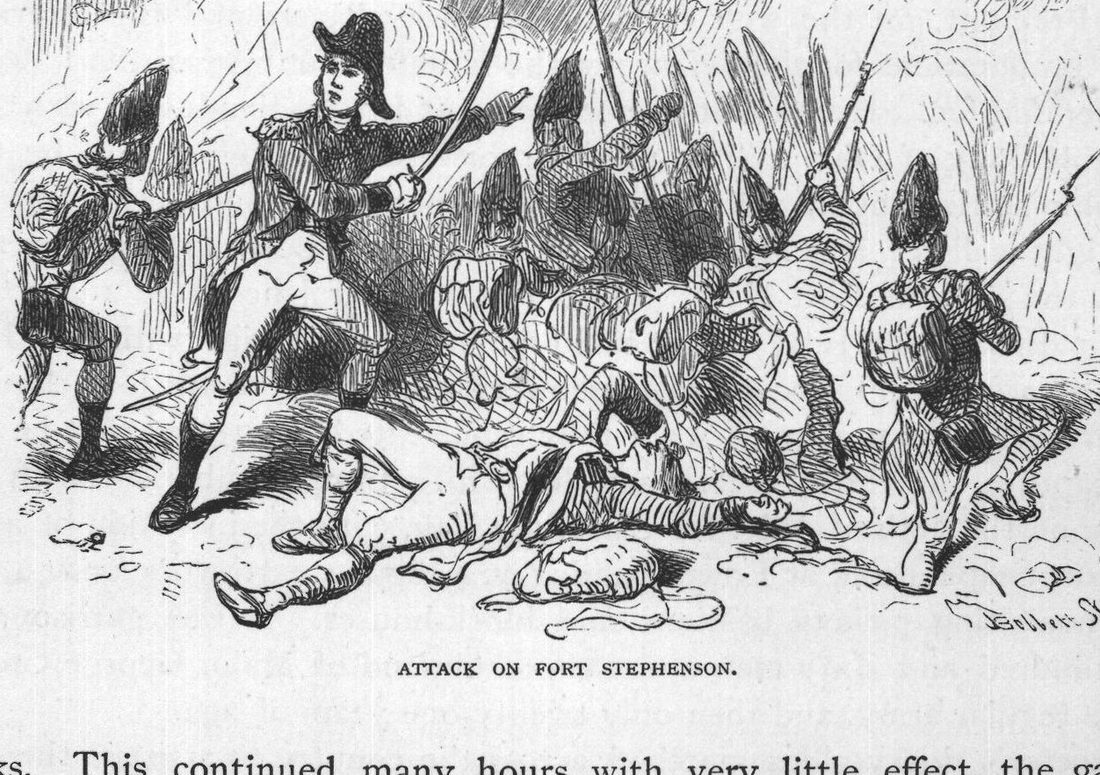
We left General Harrison and his little army at Fort Meigs. When he was assured that Proctor and his allies had returned to Fort Malden, he left General Clay in command of Fort Meigs, and proceeded to Lower Sandusky (now Fremont, on the west bank of Sandusky River,) and the interior, to make preparations for the defence of the Erie frontier against the foiled and exasperated foe. He met Governor Meigs at Lower Sandusky, with a considerable body of Ohio militia, pressing forward to his relief; and he found the Ohio settlements so full of enthusiasm, that he felt sure of aid whenever he might call for it. Meanwhile Tecumtha had been urging Proctor to renew the siege of Fort Meigs. That timid General hesitated a long time; but finally, late in July, he appeared before Fort Meigs with his Indian allies--his own and Tecumtha's followers numbering about four thousand. The tribes of the northwest were fully represented. Satisfied that he could not capture the fort, Proctor and his white troops embarked with their stores, on the 28th of July, for Sandusky Bay, with the intention of attacking Fort Stephenson, at Lower Sandusky, a regular earthwork, with a ditch, circumvallating pickets, bastions, and block-houses. It was garrisoned by one hundred and sixty men under the command of Major George Croghan of the regular army, and then only twenty-one years of age.
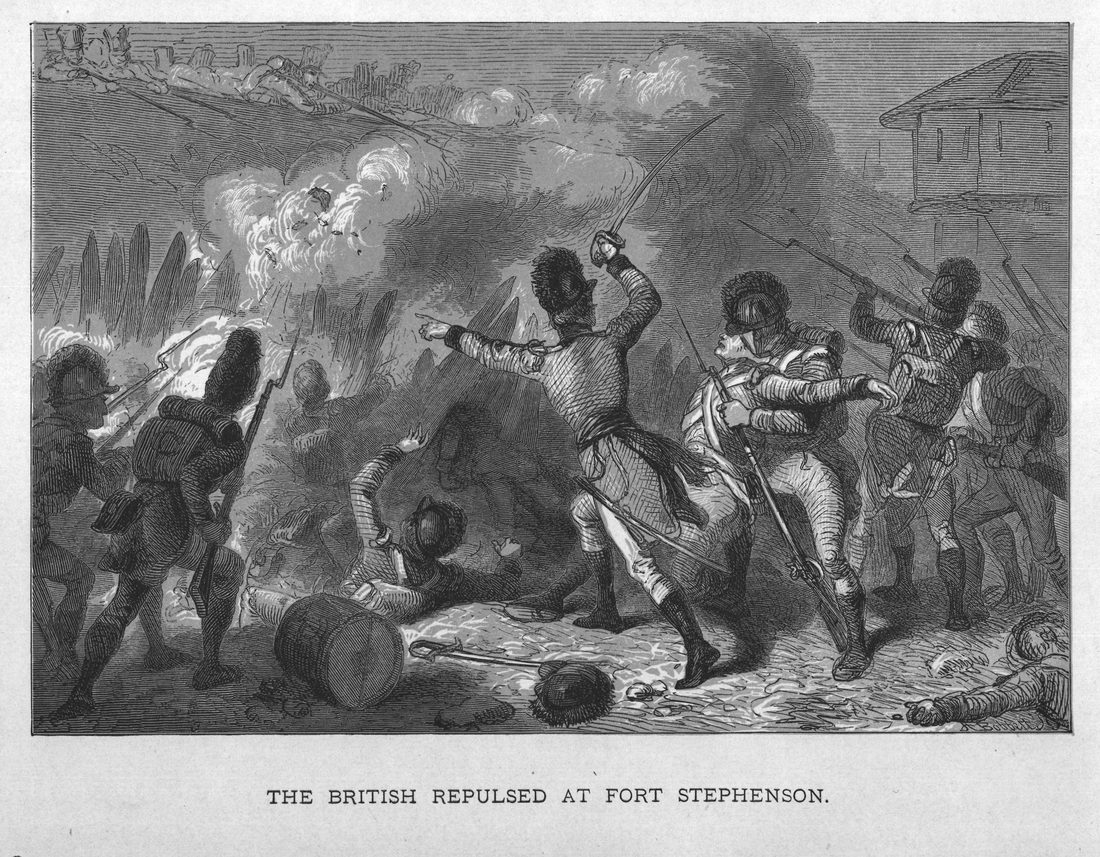
Proctor's dusky allies marched across the country to assist in the siege; and when, on the afternoon of the 31st, the British in transports and gun-boats appeared at a turn in the river a mile from the fort, it was perceived that the woods near by were swarming with Indians. Tecumtha had concealed about two thousand of them in the forest, to watch the roads along which reinforcements might attempt to reach Fort Stephenson. Proctor at once made a demand for the surrender of the fort, accompanied by the usual couched threat of massacre by the Indians in case of refusal. The demand was met by a defiant refusal. This was immediately followed by a cannonade from the gun-boats and howitzers which the British had landed. All night long the great guns played upon the fort without serious effect, and answered occasionally by the solitary 6-pound cannon possessed by the garrison, which was shifted from one block-house to another to give the impression that the works were armed with several great guns.