March over the Cordilleras
Quiet soon reigned in the Mexican capital. Santa Anna afterward made feeble and unsuccessful efforts to regain his lost power. After some defeats in skirmishes with American detachments, his troops deserted him, and before the close of October he was a fugitive, flying for personal safety to the shores of the Gulf. The President of the Mexican Congress assumed provisional authority; and on the 2d of February, 1848, that body concluded a treaty of peace with commissioners of the United States, at Guadaloupe Hidalgo. It was ratified by both governments, and President Polk proclaimed it on the 4th of July following. That treaty stipulated the evacuation of Mexico by the American army within three months, the payment of three million dollars in hand, and twelve million in four annual installments by the United States to Mexico, for the territory acquired by conquest; and, in addition, to assume debts due certain citizens of our republic to the amount of three million five hundred thousand dollars. Boundary and other disputes were settled, and New Mexico and California became acknowledged territories of the United States. It was in the very month when the treaty was signed at Guadaloupe Hidalgo, that gold was found at Captain Sutter's Mill on the American fork of the Sacramento River in California; and the official statement of the fact that gold was abundant in that territory, made in the President's message in December following, caused an emigration to the Pacific coast, not only from our States, but from other countries. Since then the yield of the precious metal there has been enormous; and in some of the other Territories in the western portion of our republic, immense quantities of silver, as well as gold, have been discovered.
Mr. Polk's administration, which closed in the spring of 1849, was chiefly distinguished by the events and results of the war with Mexico, and the settlement of the Oregon boundary question, already noticed: The war was very unpopular, at first, with a large proportion of our citizens; but the unparalleled achievements of our little army there first excited the pride of the Americans, and then aroused their enthusiasm, and the war very soon became popular. It was carried through in a manner highly honorable to our country, and its acquisition of territory not only enriched the republic but greatly extended its domain. In May, 1848, Wisconsin was admitted into the Union as a State, making the whole number of States thirty.
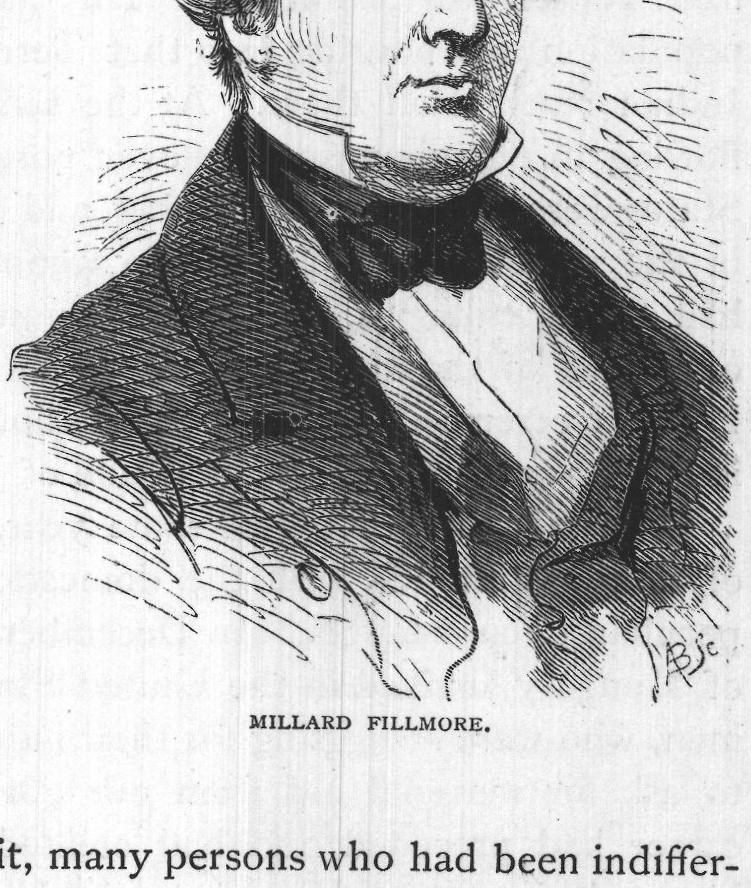
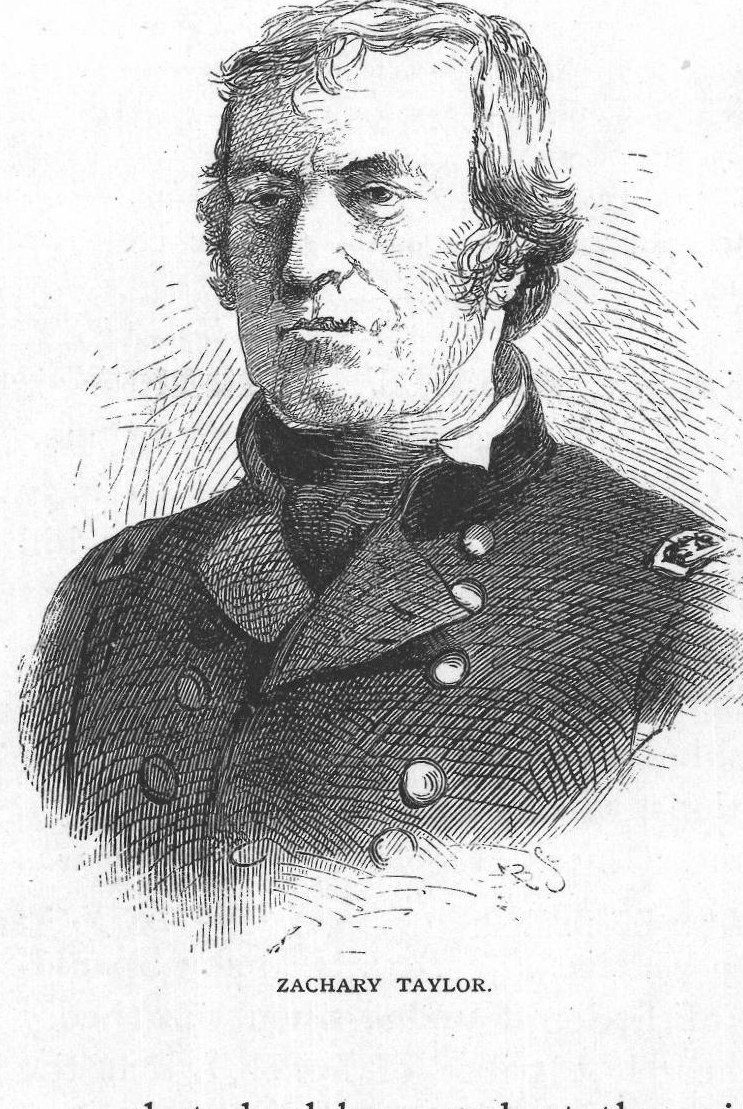
The exploits of General Zachary Taylor at an early period of the war with Mexico, made him exceedingly popular throughout the Union, and the Whig National Convention that assembled at Philadelphia on the 1st of June, 1848, nominated him for the Presidency of the republic, with Millard Fillmore for the Vice-Presidency. Both were elected in November following, and on the 5th of March, 1849 (the 4th fell on Sunday), he was inaugurated the twelfth President of the United States, Chief-Justice Taney administering the oath of office. General Taylor was eminently a "plain, blunt man," with no pretensions to polished manners, but with every characteristic of a true gentleman. He chose for his constitutional advisers John M. Clayton for Secretary of State; William M. Meredith, Secretary of the Treasury; George N. Crawford, Secretary of War; William B. Preston, Secretary of the Navy; Thomas Ewing, Secretary of the Interior, a department which had just been created; Jacob Collamer, Postmaster-General, and Reverdy Johnson, Attorney-General.
President Taylor's administration was marked by events which led to very important results. In August, 1849, General Riley, then military governor of California, summoned a convention of delegates to meet at Monterey, on the Pacific coast, to form a State constitution. California had not yet been organized as a Territory; but it was so rapidly filling up with the elements of a new and powerful State, that its speedy admission into the Union as such seemed probable. These elements were then principally gold-seekers, who were mostly enterprising young men. The convention met, and on the first of September (1849) they adopted a State constitution, an article of which excluded slavery from that Territory forever. This action--the actual formation of a State by the voice of the people--was accomplished twenty months after gold was first found at Sutter's Mill. It produced warm debates in and out of Congress, and excited a violent controversy throughout the republic on the subject of slavery, which ended only when that institution was utterly destroyed.