Inaction of the Army of the Potomac: Bowling Green and Rio Grande
While Halleck was purging Missouri of armed insurgents, Hunter, with his headquarters at Fort Leavenworth, was vigorously at work suppressing the insurrection on the borders of Kansas. Active and armed rebellion was now co-extensive with the slave-labor States. Civil war was kindling in General Canby's Department of New Mexico. An attempt was there made to attach that Territory to the Confederacy by the method employed by General Twiggs in Texas, when he betrayed the National forces under his command. Disloyal officers had been sent by Secretary Floyd, for that purpose, a year before the insurrection broke out; but failing to corrupt the troops (for not one of the twelve hundred men abandoned his flag), and incurring their hot displeasure, these leaders fled from their wrath toward Texas. On the borders of that State they found the commander and other officers of Fort Fillmore ready to co-operate with them. These men led out their unsuspecting men and betrayed them into the power of Texan insurgents.
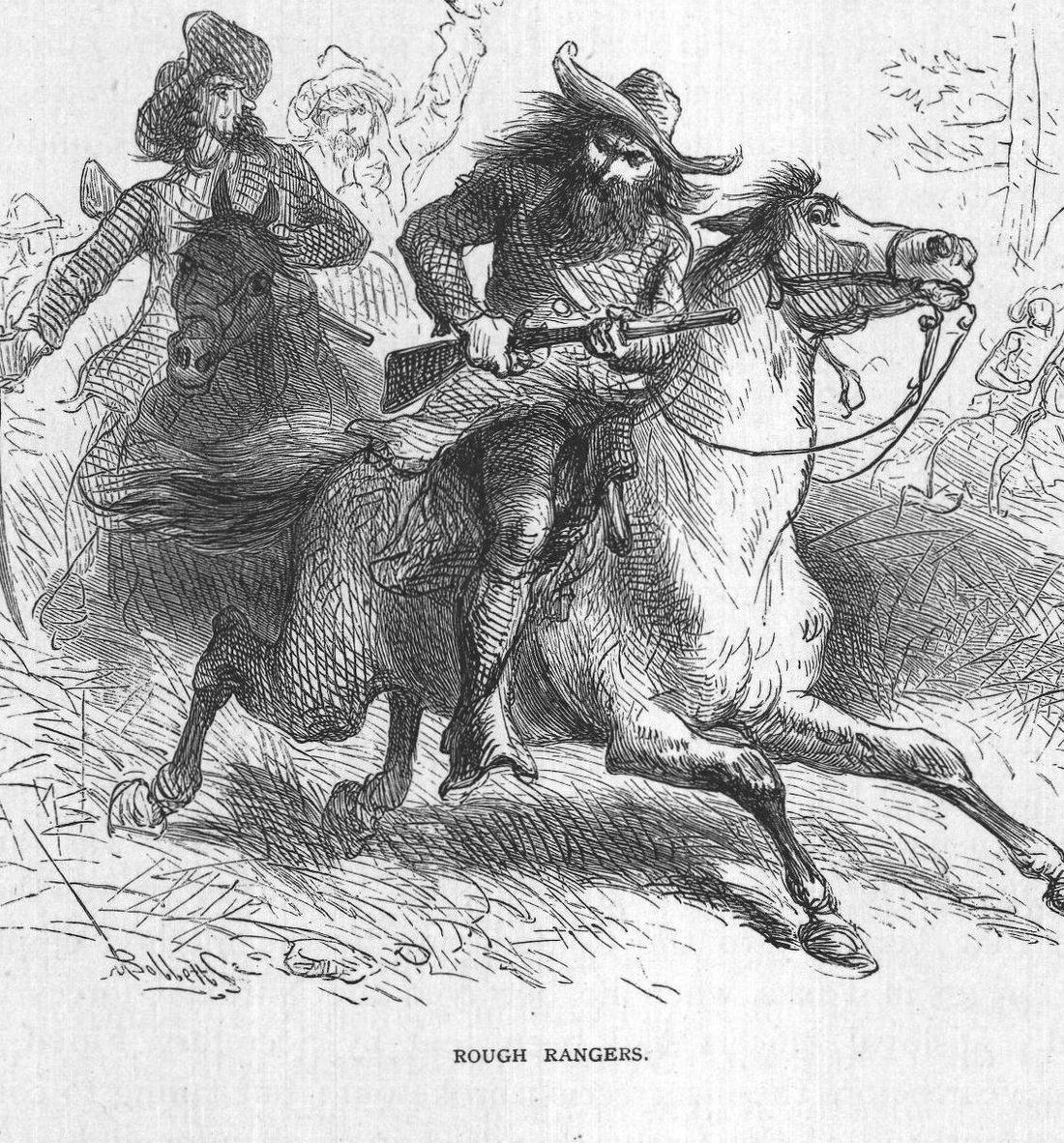
Miguel A. Otero, the representative of New Mexico in the National Congress, was in practical, active sympathy with the Secessionists; and the success of the Confederate cause in that quarter seemed to be assured, until Canby appeared and raised the standard of the Union, in strength. Around it the loyal people of the Territory gathered; and his regular troops, New Mexican levies, and volunteers, gave him a force sufficient to meet over two thousand Texans, most of them rough rangers under Colonel H. H. Sibley, a Louisianian, who invaded the Territory at the middle of February. He had twenty-three hundred followers, many of them veterans who had much experience in fighting the Indians.
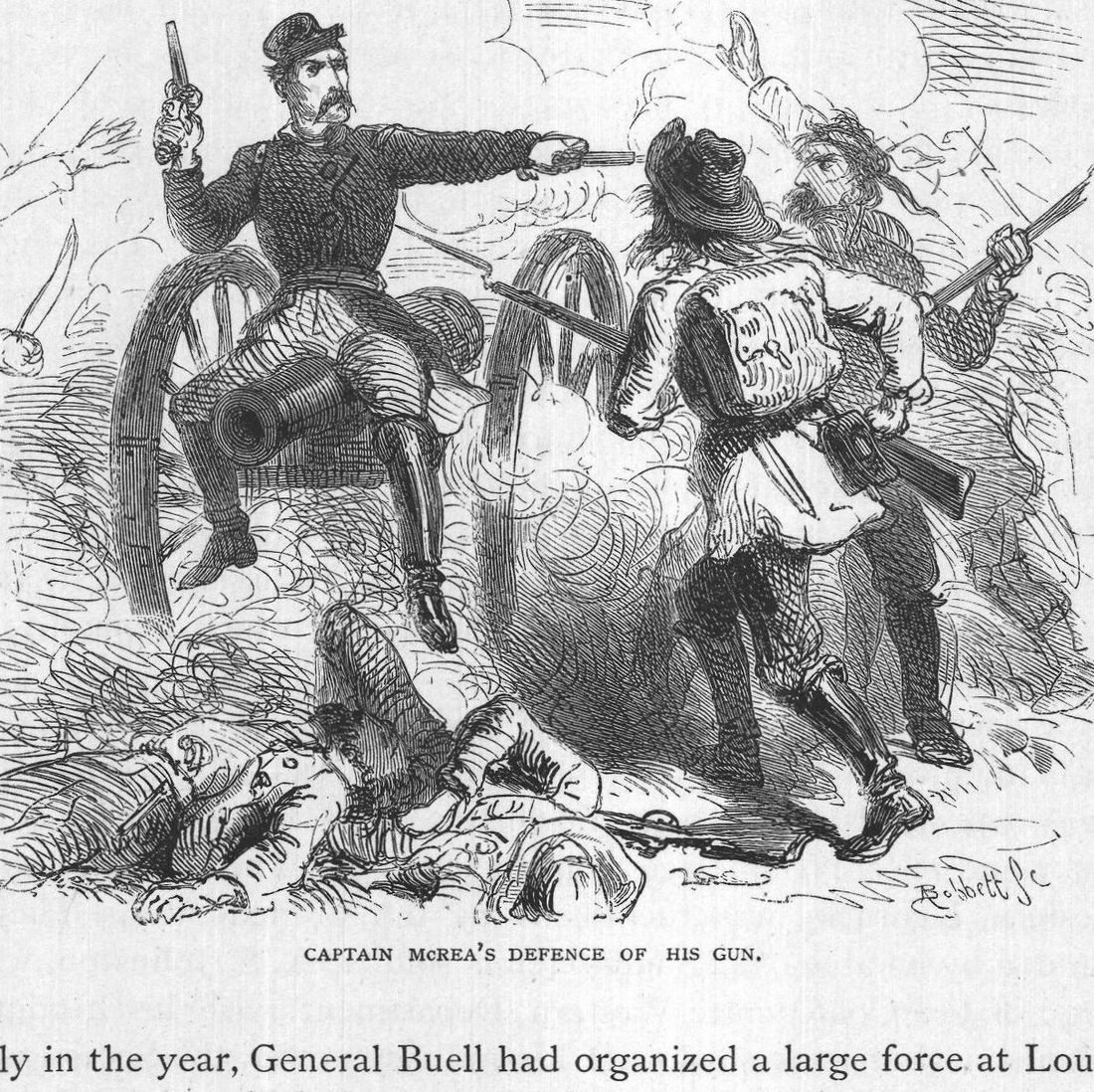
Canby was then at Fort Craig, on the Rio Grande. Sibley issued a proclamation to the people of New Mexico, in which he denounced the National Government, and demanded from the inhabitants allegiance to the Confederacy and support for his troops. Feeling confident of success, he moved slowly toward Fort Craig to attack Canby, when he was astonished to find the general prepared to meet him. He perceived that his light field-pieces would have no effect upon the fort. Unable to retreat or to remain with safety, and unwilling to leave a well-garrisoned post behind him, Sibley was perplexed. At length he forded the Rio Grande, and took a position out of reach of Canby's guns, for the purpose of drawing out the latter. In this he was successful. After some skirmishing, there was a severe conflict at Valverde, about seven miles from the fort, on the 21st of February. Canby was about to make a general advance, with an assurance of victory, when about a thousand Texans, horse and foot, armed with carbines, revolvers and bowie-knives, suddenly burst from a thick wood and attacked two of the National batteries commanded respectively by Captains McRea and Hall. The cavalry were repulsed; but the insurgent infantry pressed forward while the grape-shot were making fearful lanes through their ranks, and captured the battery of McRea. The brave captain defended his guns with great courage. Seated upon one of them, he fought the assailants with a pistol until he was shot dead. At length the Nationals, panic-stricken by the fierceness of the charge, broke and fled, and did not halt until they reached the shelter of Fort Craig. That flight was one of the most disgraceful scenes of the war; and Canby was compelled to see the victory snatched from him, just as it seemed to be secured. But Sibley, alarmed at the sudden and unexpected development of Canby's strength by accessions to his ranks, hurried toward Santa Fe, the capital of the Territory which he captured but could not hold; and he was soon afterward driven over the mountains into Texas. The Civil War now extended from Maryland in the northeast to New Mexico in the southwest, and was everywhere marked by the vigor and malevolence which generally distinguish such wars.
While these events were occurring westward of the Mississippi, others of great importance had been in progress immediately eastward of its waters, where efforts had been made to expel the Confederates from Kentucky and release Tennessee from their grasp. The region of southern and western Kentucky was then held by the Confederates. They were commanded by an able officer and veteran soldier, A. S. Johnston, who was in charge of the Confederate Western Department, with his headquarters at Nashville. Under the shadow of his military power, the Secessionists of Kentucky had met in Convention in November, 1861, and performed the farce of declaring the State to be independent. They passed an ordinance of secession; organized a provisional government; chose George W. Johnson provisional governor; appointed delegates to the Confederate congress at Richmond, and called Bowling Green the State capital. Fifty-one counties were represented in that "Sovereignty Convention" by about two hundred men, without the sanction of the people. At the same time General Johnston had concentrated a large force at Bowling Green, and strengthened the position of Polk at Columbus. General Hardee superseded General Buckner; and General Zollicoffer was firmly planted at Cumberland Gap, the chief passage between Eastern Kentucky and East Tennessee. Between the extremes of the Confederate line across Kentucky were fortified posts, the most important of which were Fort Donelson on the Cumberland River, and Fort Henry on the Tennessee River.