"Hard Cider Campaign"
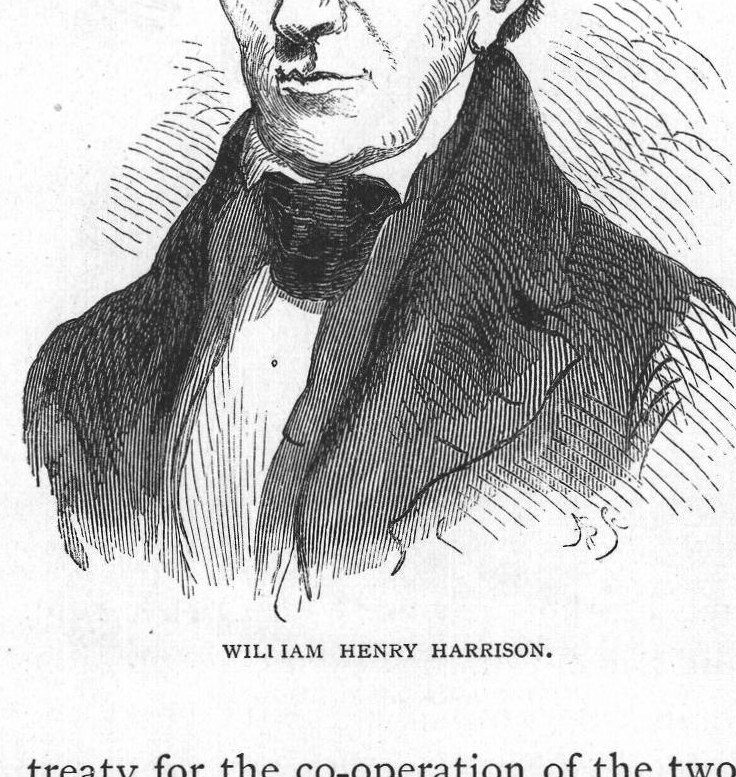
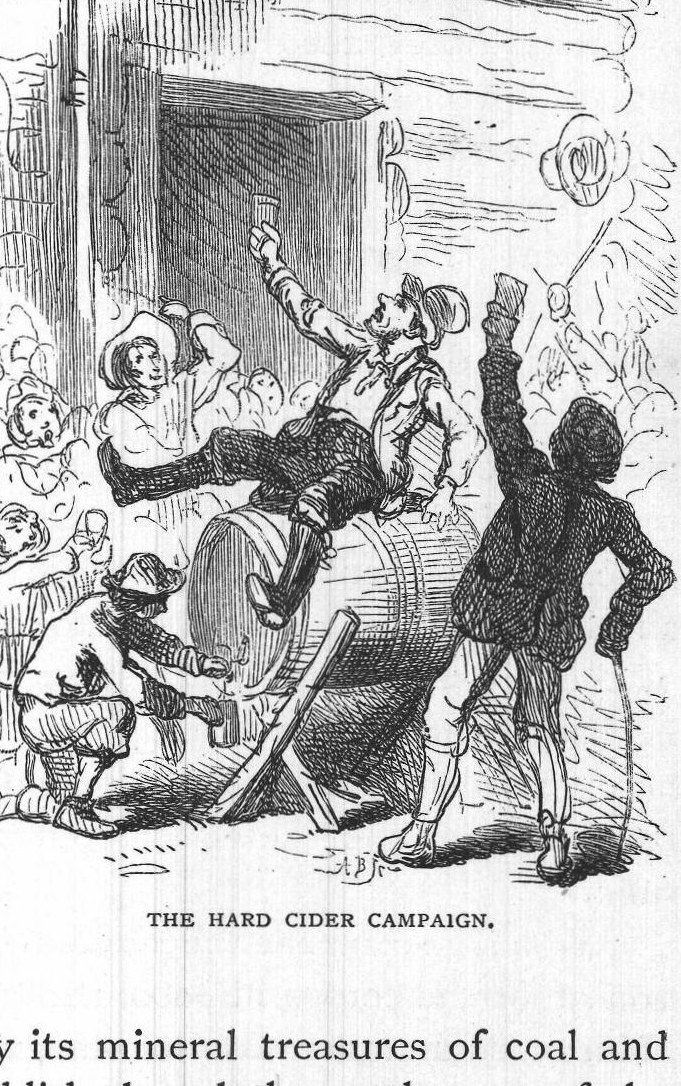
Mr. Van Buren was a candidate for the Presidency a second time, and was nominated for that office by the unanimous vote of the Democratic convention assembled at Baltimore in 1840. In December, 1839, a national Whig convention, held at Harrisburg in Pennsylvania, nominated General William Henry Harrison of Ohio for President and John Tyler of Virginia for Vice-President. The canvass was a very exciting one, and the method of carrying it on by one party was exceedingly demoralizing. Because Harrison lived in the West and his residence was formerly a log-cabin, such a structure became the symbol of his party; and because of his proverbial hospitality, that quality was symbolized by a barrel of cider. Log-cabins were erected all over the country as places for political gatherings, and seas of cider were drank in them. Young and old partook freely of the beverage, and the meetings were often mere drunken carousals that were injurious to all, and especially to youth. Many a drunkard afterward sadly charged his departure from the path of sobriety to the "Hard Cider" campaign of 1840. Demagogues, as usual, had made the people believe that a change in administration would restore prosperity to the country, and they adroitly held the administration of Van Buren responsible for nearly all the woes the country was suffering. The consequence was that Harrison and Tyler were elected by overwhelming majorities; and in the spring of 1841, Mr. Van Buren surrendered the Presidential chair to the popular soldier of the West.
Fifty years had now elapsed since the formation of the government under the new constitution. The number of the States had doubled, and the population had reached about seventeen million souls. The resources of the country had been largely developed, especially its mineral treasures of coal and iron. The railway system was fairly established, and the settlement of the West was in rapid progress. From the beginning of the career of the republic, the State and banking institutions had been closely wedded; the chief event of Mr. Van Buren's administration was their absolute divorce. They were reunited during the late civil war, and their nuptials, under better auspices, have been fruitful of blessings to the country.
General Harrison was an old man-sixty-eight years of age-when he entered upon the duties of chief magistrate of the nation. He seemed vigorous in mind and body when he delivered his inaugural address from the eastern portico of the Capitol. It was received with favor by all parties, for it was full of wisdom; and confidence was half restored in the commercial world, when it was known that he had chosen Daniel Webster for Secretary of State; Thomas Ewing, Secretary of the Treasury; John Bell, Secretary of War; George E. Badger, Secretary of the Navy; Francis Granger, Postmaster-General, and John J. Crittenden, Attorney-General. This beginning gave omen of the dawn of a day of prosperity for the land, and there were glad hearts everywhere. But the anthems of the inaugural day were speedily changed into solemn dirges. The hopes centred in the new President were extinguished; for precisely one month after he took the oath of office from Chief-Justice Taney, he died. He had performed only one official act of great importance during his brief administration, and that was the issuing of a proclamation on the 17th of March, calling an extraordinary session of Congress in May to consider the subjects of finance and revenue.
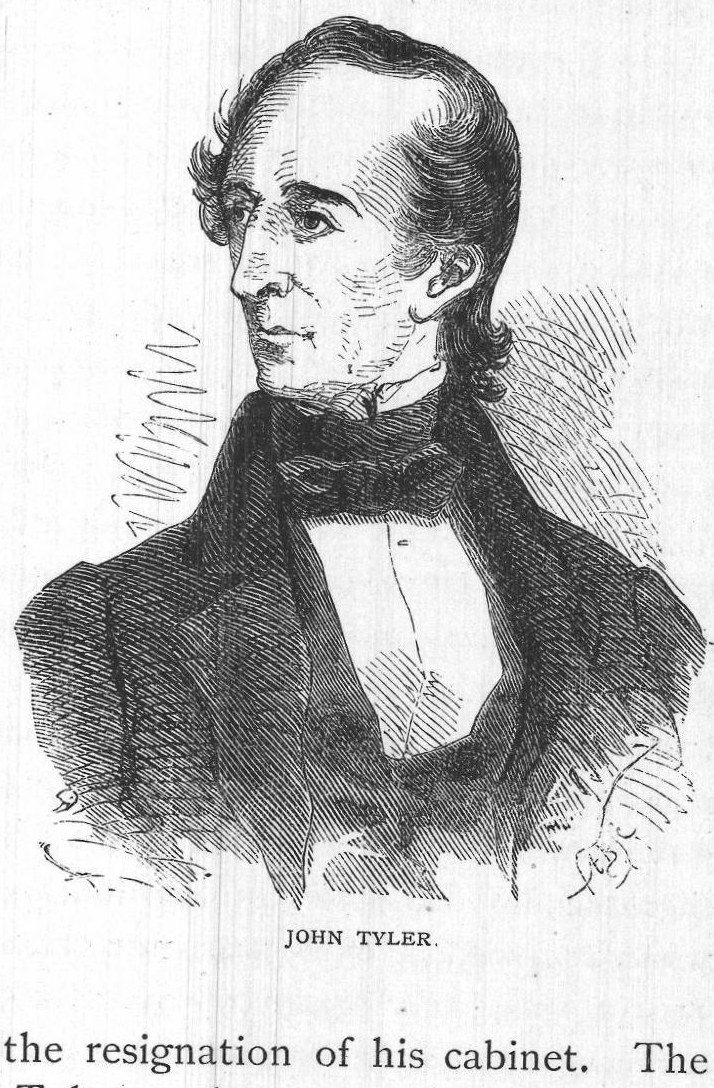
John Tyler, the Vice-President, became the constitutional successor of President Harrison. He was called to Washington from Williamsburg in Virginia, by a message sent by Harrison's cabinet-ministers on the 4th of April (the day on which the President died), and he was in the national capital at four o'clock on the morning of the 6th. At noon, the cabinet-ministers called upon him in a body, and he took the oath of office, administered by Judge Cranch. To the gentlemen present, after alluding to the deceased President, Mr. Tyler said, "You have only exchanged one Whig for another." He had been a Democrat of the school of strict constructionists of the Constitution, but when he was a candidate for the Vice-Presidency, he had avowed himself to be a firm and decided Whig. It seems proper here, in order to better understand the brief record of events that follow, to give an outline sketch of political parties in the United States at that time.