Efforts to Capture Charleston
General Gillmore was ready for another attack on Forts Wagner and Sumter on the 17th of August, and on that day the guns of twelve batteries and of the fleet opened upon them. Before night the granite walls of Fort Sumter began to crumble ad its cannons ceased to roar, under the pressure of Dahlgren's guns. The land troops pushed their parallels nearer and nearer Fort Wagner; while the fleet guns continually pounded away, day after day, until the 6th of September, when General Terry was prepared to storm the latter work. Then it was ascertained that the Confederates had evacuated it and fled from Morris Island. Gillmore took possession of Fort Wagner and turned its guns o Fort Sumter, battering it dreadfully and driving away (it was supposed) its garrison. But that sentinel which had so long guarded the gate to Charleston harbor, only slumbered ; and when, on the night of the 8th, an armed force form the ships, in small boats, attempted to take possession of it, a vigilant garrison that had been lying quietly there, suddenly arose and repulsed the assailants with great loss to the latter. Finally, late in October (1863), Gillmore brought his heaviest guns to bear on Sumter, and reduced the once proud fort to a heap of ruins. Charleston now, as a commercial mart, had no existence. For months not a blockade-runner had entered its harbor, and its wealth and trade had departed. In a military point of view, as we have observed, it was absolutely of very little importance. Let us leave the Atlantic coast, and consider stirring events in the interior.
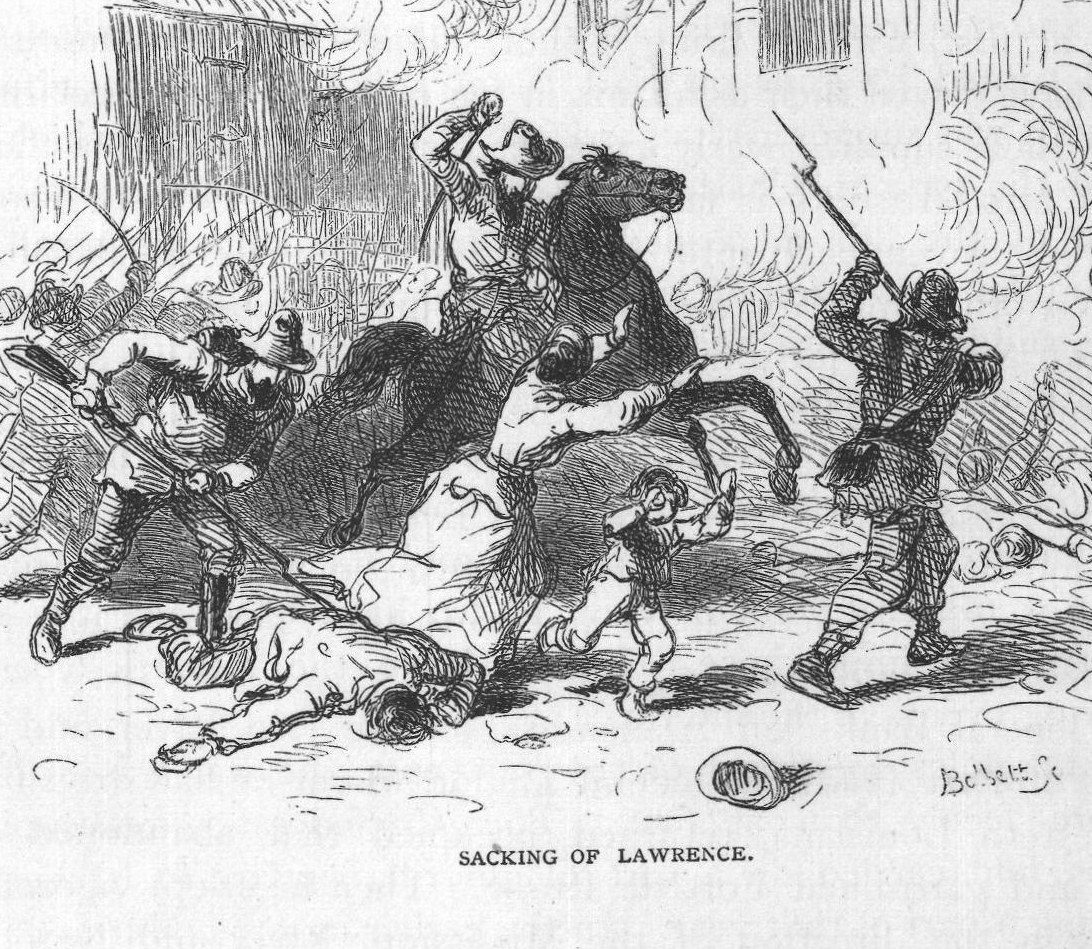
A thousand miles westward of the sea-coast the war was still going on, but more feebly than at first. The Confederates reoccupied all Taxes in 1863, and carried on a sort of guerrilla warfare in Arkansas and Missouri during a part of that year. In the earlier months, Marmaduke was active with his mounted men. He rushed over the border from Arkansas and Missouri, and fell upon Springfield in January, but was repulsed with a loss of two hundred men. After some other reverses, he fell back; and at Little Rock, the capital of Arkansas, he planned a formidable raid into Missouri, chiefly for the purpose of seizing National stores at Cape Girardeau, on the Mississippi. He invaded the State with eight thousand men, and was met at the Cape by General McNeil, in the 20th of April, who, after a sharp engagement, drove Marmaduke out of Missouri. Other bands of Confederates, under various leaders, reamed over the western borders of Arkansas, and, at one time, seriously menaced fort Blunt, in the Indian Territory. These was a sharp engagement at Honey Springs, in that Territory, on the 17th of July, between Nationals under General Blunt and Confederates in strong force led by General cooper, in which the latter were defeated, and a part of them fled into northern Taxes. Guerrilla bands I Blunt's rear did much mischief. One of them led by a white savage named Quantrell, fell upon the defenceless town of Lawrence, in Kansas, on the 13th of August, and murdered one hundred ad forty of the inhabitants. They also laid one hundred and eighty-five buildings ashes, and escaped.
Earlier than this, the strongly fortfied post of Helena, on the Mississippi, in eastern Arkansas, became a coveted object ; and on the 3d of July (1863) eight thousand Confederates, under General Price and others, ignorant of the strength of the post, attacked it. General Steele was in command there. After a sharp fight, the Confederates were repulsed with a loss of twenty per cent. of their number. That section of Arkansas was then abandoned by the Confederates ; ad on the 10th of August, Steele left Helena with twelve thousand troops and forty pieces of cannon, to attempt the capture of Little Rock. He pushed back Marmaduke, who confronted him ; and early in September he moved o the State capital in two columns, one on each side of the Arkansas River. The confederates there, after setting fire to several steamboats, abandoned the place on the evening of the 10th (September) and fled to Arkadelphia, on the Wachita River. Meanwhile General Blunt had been trying to bring the Confederates and their Indian allies in western Arkansas to battle, but had failed. He took possession of Fort Smith (September 1) and garrisoned it; and on the 4th of October, while he was on his way from Kansas to that post with an escort of one hundred cavalry, they were attacked nearer Baxter's Springs, on the cherokee Reservation, and scattered, by six hundred guerrillas led by the notorious Quantrell, who plundered and burt the accompanying train of the Nationals. Blunt's forces were nearly all killed or disabled in the conflict. The wounded were murdered ; and Blunt and only about a dozen followers barely escaped, with their lives, to Little Fort Blair. Some of Blunt's escort fled, at first, without firing a shot. Had they acted more bravely, they could have driven their assailants in ten minutes, Blunt declared.