Doing of Congress
Almost simultaneously with the issuing of the French decree, an extraordinary session of Congress, called by President Adams to consider the foreign relations of our government, met at Philadelphia. The conduct of the Directory had produced a great revulsion in public feeling in our country. The reaction strengthened the Executive arm and the administration party, and patriotic Democrats began to talk complacently of war with France, which then seemed inevitable. But a majority of the cabinet favored further attempts at negotiations; and the President, with the concurrence of the Senate, appointed John Marshall, a Federalist and afterward Chief Justice of the United States, and Elbridge Gerry, a Democrat and afterward Vice-President of the republic, envoys extraordinary to join Mr. Pinckney and attempt to settle all matters in dispute between the two governments, by diplomacy. After a session of little more than six weeks, Congress adjourned. They had provided for calling out eighty thousand militia, creating a small naval force, and acts for preventing privateering.
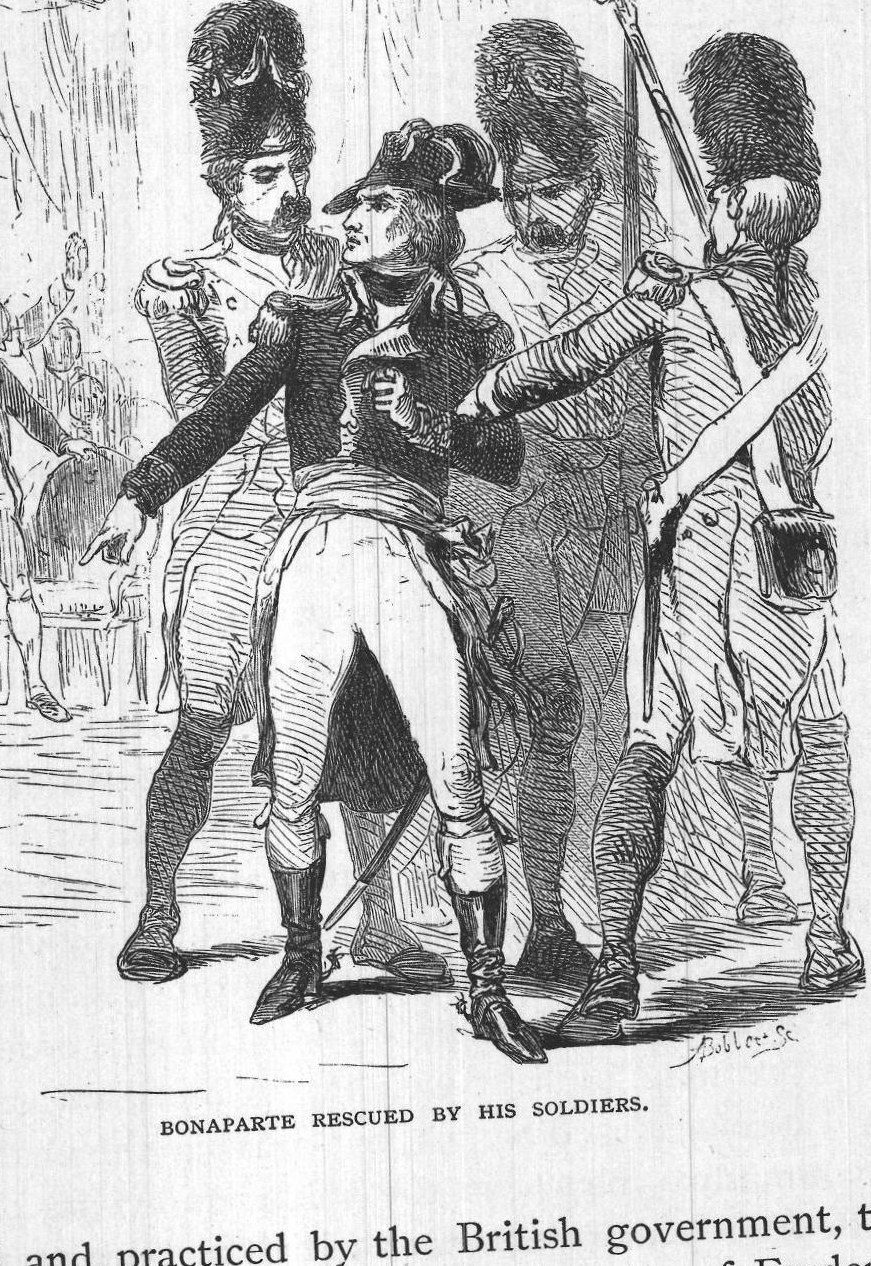
In the meantime success had waited on French arms and French diplomacy almost everywhere. Bonaparte, who was making his victorious marches toward the Danube and the Carpathian Mountains, had compelled Austria to make peace with his government; and England, the most powerful of the enemies of France, seemed to be tottering to its fall, for the suspension of specie payment by the Bank of England had rudely shaken and weakened her financial power. It was at this flood-tide of the military and diplomatic conquests of France in October, 1797, that the American envoys reached that country and sought an audience with the French Directory. Their request was met by a haughty refusal, unless the envoys would agree to the humiliating terms of first paying into the exhausted French treasury a large sum of money in the form of a loan; by the purchase of Dutch bonds wrung from that nation by the French, and a bribe to the amount of $240,000 for the private use of the five members of the French Directory! This proposition came semi-officially from Talleyrand, one of the most expert and unscrupulous political trimmers that ever lived. It was accompanied by a covert threat, that if the proposition was not complied with, the envoys might be ordered to leave France in twenty-four hours, and the coasts of the United States be ravaged by French frigates sent from St. Domingo. The envoys refused compliance, and the occasion gave Pinckney the opportunity to utter in substance the noble words: "Millions for defence, but not one cent for tribute." Finding their mission to be useless, the envoys asked for their passports. They were given to the two Federal envoys under circumstances which amounted to their virtual expulsion from the country, while Gerry was induced to remain. He, too, was soon treated with so much insolence and contempt by Talleyrand and his associates, that he returned home in disgust to meet the indignation of his countrymen for consenting to remain. Gerry had held interviews with Talleyrand without the knowledge of his associates, and it was believed that his representation of the strength of the "French party" in the United States encouraged that minister to pursue the course he did.
Meanwhile the Directory had issued another decree, which effectually annihilated American commerce in European waters. This act, the indecent treatment of the envoys and the continued depredations of the French cruisers, aroused a vehement war-spirit in the United States. President Adams, in his first annual message to Congress (November 23, 1797), recommended preparations for war. Some of the more radical of the opposition leaders advised the payment of the money demanded, rather than risk a war with France--better to purchase peace by paying tribute than to contend for the right and for national independence! But the great body of the nation acted patriotically. In March, 1798, the President, in a special message, asked Congress to provide means for war. The request was promptly complied with. A provisional army of twenty thousand regular soldiers was voted, and provision was made for the employment of volunteers as well as militia; and then were made those provisions for a national navy already alluded to. The office of Secretary of the Navy was created, and Benjamin Stodert of the District of Columbia was the first to enter the cabinet as the head of the Navy Department, which he did at the close of April, 1798. Party-spirit disappeared in the National Legislature to a great degree, and the popular excitement against the opposition leaders in Congress became so intense, that some of the most obnoxious of them from Virginia sought personal safety in flight, under the pretence of needed attention to their private affairs. The younger republicans wore black cockades upon their hats, in imitation of the patriots of the Revolution. The stirring songs Hail Columbia and Adams and Liberty, the former written by Joseph Hopkinson and the latter by Robert Treat Paine, were now first published, and were sung all over the land with unbounded applause.