Destruction of Norfolk
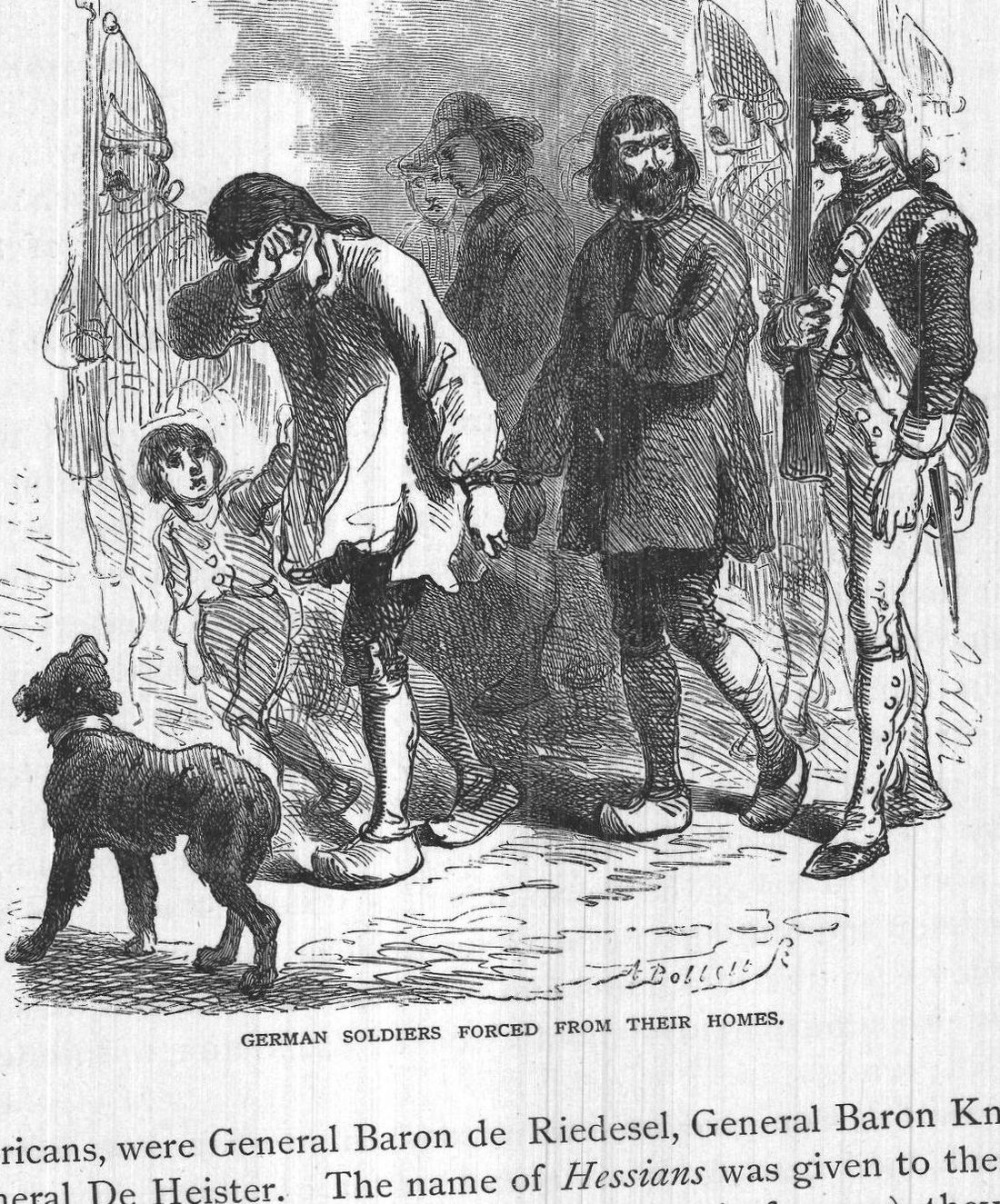
So was ended royal rule in Georgia. At the same time royal authority had really ceased in all the colonies. Each had formed a provisional government for itself, and each looked to the Continental Congress as the central director of the civil and military movements of the United Colonies in the great struggle before them. They were waging a defensive war against a powerful nation, whose maritime superiority was universally acknowledged; and the contest would have been hopeless on their part but for the geo-graphical, topographical, and social conditions which were substitutes, in a large degree, for numerous and well-disciplined and well-furnished armies, which they lacked. The American settlements were sparsely sprinkled along a comparatively narrow selvedge of the continent on the western shores of the Atlantic Ocean, for a thousand miles. Their country was broken by rugged hills, considerable rivers and vast morasses, and heavily wooded almost everywhere. The population were occupied chiefly in farming, and presented very few salient points of attack by military or naval forces, such as cities and large villages. The only towns of considerable size were Boston, Newport, New York, Philadelphia, Norfolk, and Charleston. Of these, three of the larger ones did not contain twenty thousand inhabitants each, while neither of the others had half that number. It was next to impossible to subdue a country so extended and so populated, if the people were tolerably united. This fact dawned upon the minds of the headstrong king and his supple ministry, after the events at Lexington and Concord, as a new and ominous light. They had declared before the world their intention to crush the rebellion in America, and to enforce obedience; but they saw with alarm that their military establishment was not strong enough to spare sufficient troops and ships from the necessary police force of the kingdom to do it; so they began to look for foreign mercenaries in America and Europe--the savages of our forests and the soldiers of the old world despotisms--to aid them in enslaving between two and three million of their best subjects.
The king first applied to the Empress of Russia, whom he was disposed to regard as a half-barbarian sovereign of a barbarous nation, for the loan of her soldiers. Her ministers expected a ready compliance, for could not British gold purchase anything? Gibbon, the historian, wrote to a friend in October, 1775: "When the Russians arrive, will you go and see their camp? We have great hopes of getting a body of these barbarians; the ministers daily and hourly expect to hear that the business is concluded; the worst of it is, the Baltic will soon be frozen up, and it must be late next year before they can get to America." But Catharine sent a flat refusal to enter into such nefarious business, half-barbarian as the British king thought her to be. She said, in a letter written by her minister, "I am just beginning to enjoy peace, and your majesty knows that my empire needs repose. It is also known what must be the condition of an army, though victorious, when it comes out of a long war in a murderous climate. There is an impropriety in employing so considerable a body in another hemisphere, under a power almost unknown to it, and almost deprived of all correspondence with its sovereign. My own confidence in my peace, which has cost me so great efforts to acquire, demands absolutely that I do not deprive myself so soon of so considerable a part of my forces. Affairs on the side of Sweden are but put to sleep, and those of Poland are not yet definitely terminated. Moreover, I should not be able to prevent myself from reflecting on the consequences which would result for our own dignity, for that of the two monarchies and the two nations, from this junction of our forces, simply to calm a rebellion which is not supported by any foreign power."
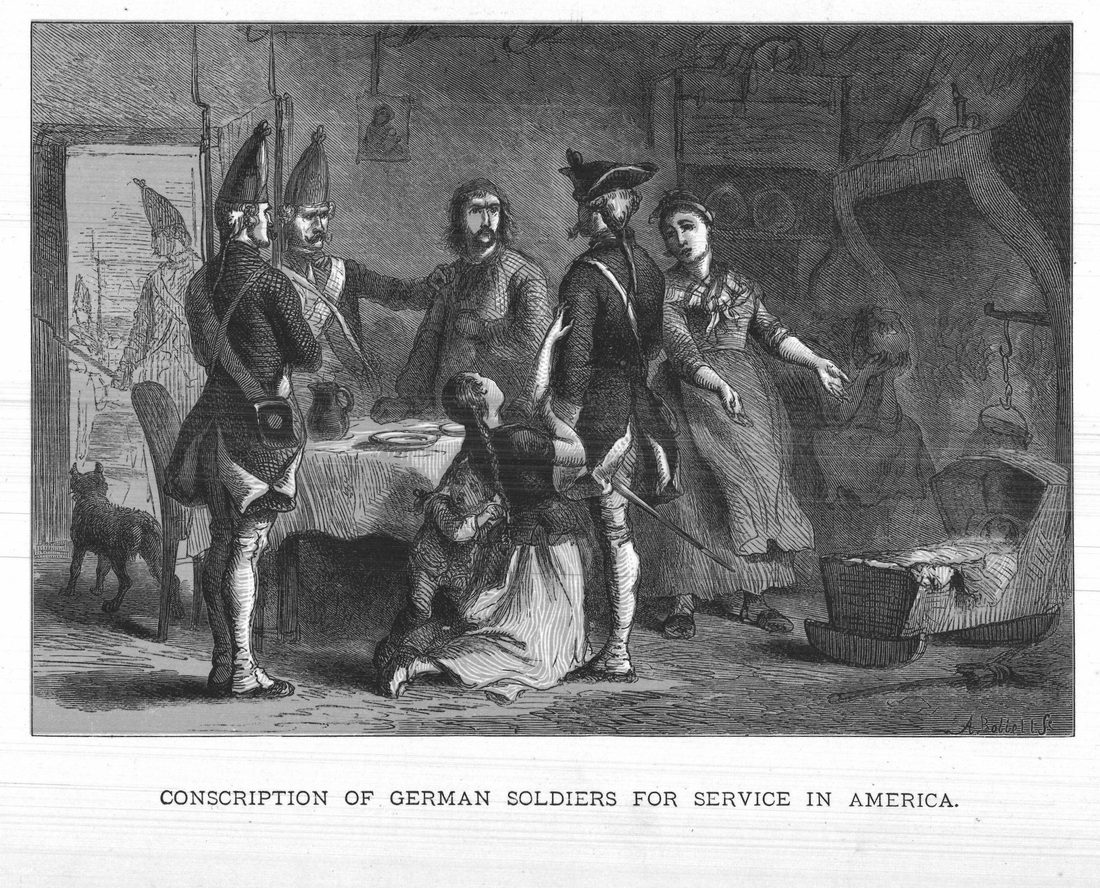
This letter, which conveyed reproof in sarcastic words, stung and irritated the king. He was also surprised and offended by what he deemed her want of politeness, in not answering his gracious autograph letter with her own hands, and with soft words becoming a woman. He sputtered out his indignation in his rapid way, and said: "She has not had the civility to answer me in her own hands, and with soft words becoming a woman. He sputtered out his indignation in his rapid way, and said: "She has not had the civility to answer me in her own hand; and has thrown out expressions that may be civil to a Russian ear, but certainly not to more civilized ones." The king was compelled to pocket his wrath, which he did with dignity and composure after the first ebullition of feeling, and turning to the needy German princes--the rulers of a people out of whom had come his own dynasty--he was rewarded with success.