Colonel Brown's Raid in the Rear of Burgoyne's Army
BURGOYNE felt compelled, by imperious circumstances, to move forward. Orders had been sent to General Lincoln, stationed at Manchester, to make a movement in the rear of the invades, and he sent Colonel John Brown (the officer who failed to co-operate with Ethan Allen at Montreal), with five hundred light troops and some artillery, to cut off Burgoyne's sources of supplies. At dawn on the 18th of September (1777), Brown surprised an outpost at the foot of Lake George; captured a British provision vessel; seized the post at the falls of the outlet of the lake; took possession of Mount Hope and Mount Defiance, with the French lines, and demanded the surrender of Ticonderoga and Mount Independence. He destroyed two hundred vessels in that outlet, including seventeen gun-boats and an armed-sloop; released a hundred American prisoners, and captured about three hundred of the enemy. He also assailed a British post on Diamond Island, in Lake George; but this, and the two forts, were too strong for his little force to capture, and he returned to Manchester with his trophies; among them were five field-pieces.
In the meantime Burgoyne had advanced to a point very near the American lines; and on the morning of the 19th, he moved his army in three columns to offer battle. The left wing, with the immense train of artillery, under the command of Generals Phillips and Riedesel, kept upon the plain near the river. The centre, composed largely of Germans, extended to a range of hills that were touched by the American left, and was led by Burgoyne in person. Upon these hills Fraser and Breyman, with grenadiers and infantry, were posted, with the intention of outflanking the republicans. The front and flank of the invading army were covered by the Canadians, Indians, and Tories who remained in camp. Burgoyne's men had slept on their arms for several nights, expecting an attack in force from the Americans, for the active Arnold, with about fifteen hundred men, had annoyed the British continually, by sudden assaults at night.
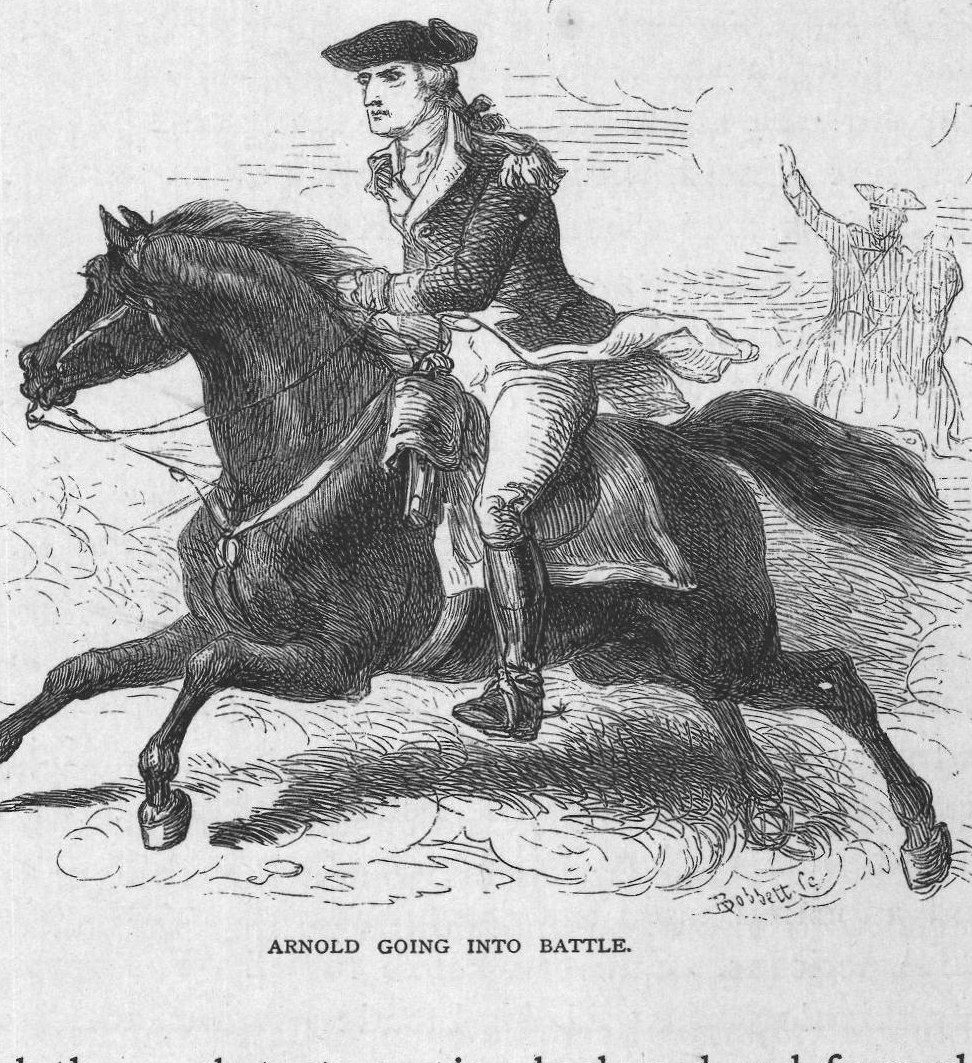
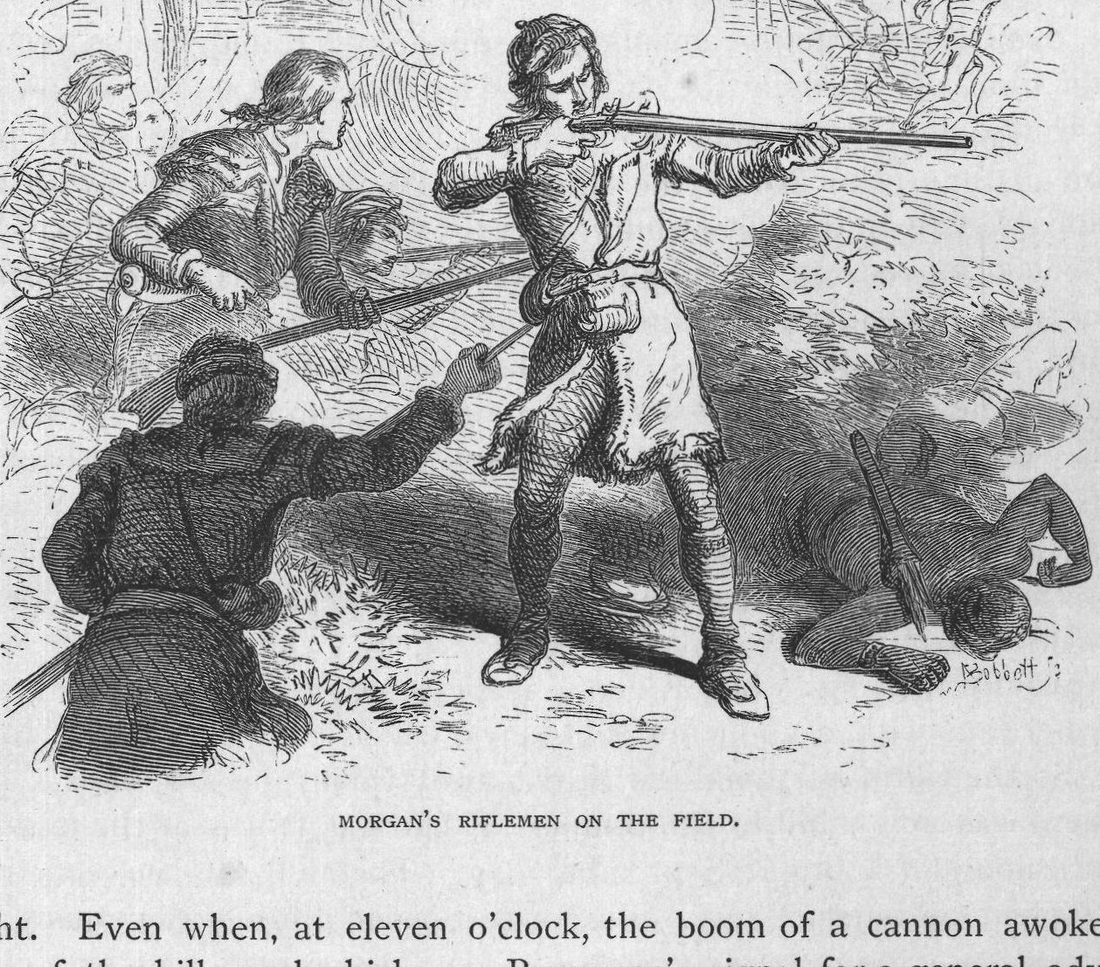
Gates, who lacked personal courage and the skill of a good commander, had resolved to act on the defensive within his lines. Arnold and others had been observing, through vistas in the woods, evident preparations for battle all the morning, and had urged Gates to send out a detachment to smite the enemy. But he would give no order and evinced no disposition to fight. Even when, at eleven o'clock, the boom of cannon awoke the echoes of the hills, and which was Burgoyne's signal for a general advance of his army, Gates seemed almost indifferent. His officers became very impatient as the peril to the camp drew nearer. Arnold was as restive as a hound in a leash; he was finally permitted to order out Morgan with his riflemen and Dearborn with infantry, to attack the Canadians and Indians who were swarming upon the hills in advance of Burgoyne's right. This detachment fell vigorously upon the foe and drove them back. Morgan's men pursued them so eagerly, that his riflemen became scattered and weakened, and a reinforcement of Tories drove them back. For a moment Morgan thought his corps was ruined. He sounded his shrill whistle, when they rallied around him, and with Massachusetts and New Hampshire troops, the former under Dearborn and the latter under Scammell and Cilley, they repeated the charge. After a short, sharp fight, the parties withdrew to their respective lines, with the loss of twenty men made prisoners, on the part of the Americans. Morgan had his horse shot under him.
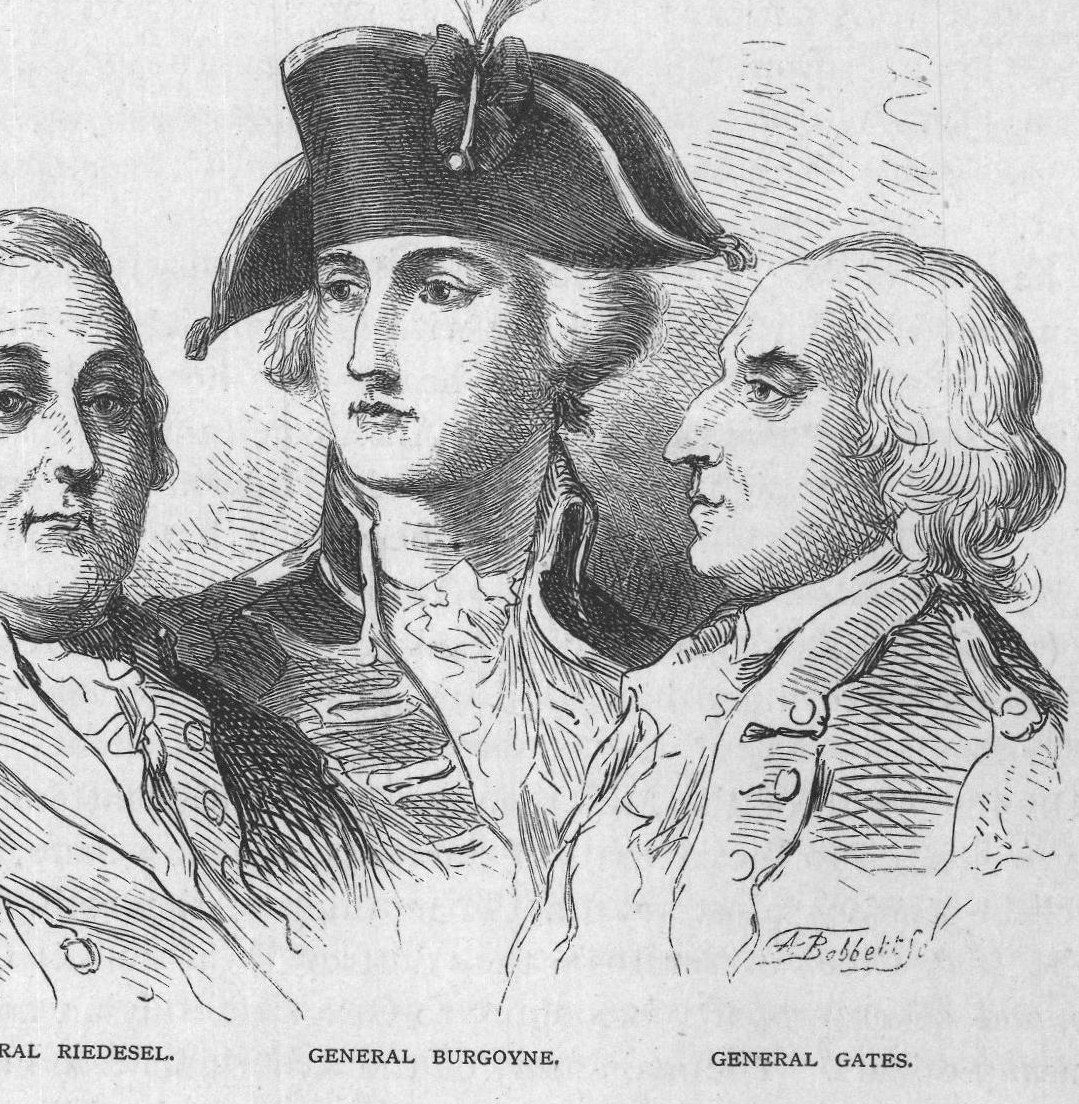
Burgoyne, in the meantime, had made a rapid movement for the purpose of falling heavily upon the American left and centre. At the same time, Fraser, on the extreme right, made a quick movement to turn the American left. The vigilant Arnold, with equal celerity of movement, attempted to turn the British right at the same time. He might have succeeded had not Gates denied him reinforcements and done everything in his power to restrain him. Masked by the thick woods, neither party could know much about the doings of the other, and they suddenly and unexpectedly met in a ravine, west of Freeman's Farm at which Burgoyne had halted. There they fought desperately for awhile. Arnold was forced back, when Fraser, by a quick movement, called up some German troops from Burgoyne's centre, to his aid. Arnold rallied his men, and with the assistance of New England troops under Brooks, Dearborn, Scammell, Cilley, and Hull, he smote the enemey so lustily that their line began to waver and fall into confusion. General Phillips, from his position below the Heights, heard the din of battle resounding through the woods, and hurried over the hills with fresh troops and some artillery, followed by a portion of the Germans under Riedesel, and appeared upon the ground when the victory seemed about to rest with the Americans. Still the battle raged. The ranks of the British were fearfully thinning, when Riedesel made a furious attack on the flank of the Americans with cannon and musketry, which compelled them to give way. So the Germans saved the British army from ruin.