Change in Public Sentiment
The apathy and folly of the British monarch and ministers, at this time, were astonishing to men who perceived the gravity of public affairs through the medium of events in America. They were in strong contrast with the energy and wisdom of the managers of American affairs at home and abroad. A British army had been driven from Boston; a British fleet had been expelled from Charleston harbor; the colonies had declared their independence, and full thirty thousand British and German troops had been defied and combated; and yet the Parliament did not meet until the close of October (1776) to consider these things. Then the king, in his speech, congratulated the legislature upon the success of the royal troops in America, and assured them, without the shadow of a good reason, that most of the Continental powers entertained friendly feelings toward Great Britain. After rejecting every conciliatory proposition, and voting men and supplies for the united service in America, Parliament adjourned to keep the Christmas holidays with an apparent feeling that their votes had crushed the trans-Atlantic rebellion. At that moment Washington was planning his brilliant achievements in person.
Meanwhile the American Congress had held a perpetual session. They knew that the European powers had no real friendship for haughty Britain. They knew that France, Spain, the States-General of Holland, the Prince of Orange, Catharine of Russia and Pope Clement, all feared and hated England, and were anxious for a pretence to strike her fiercely and humble her pride, because of her potency in arms, commerce, and diplomacy, and her strong Protestantism. Therefore, as we have seen, the Congress sent Silas Deane to France as a commercial agent in the spring of 1776, to procure army supplies, and in the autumn appointed Dr. Franklin and Arthur Lee joint commissioners with Deane for the same purpose. The latter had already procured arms from the French arsenals, and abundant promises of men and money from the French minister, Vergennes. The British ambassador to the French court (Lord Stormont) treated the Commissioners with contempt. When they asked him to make an arrangement for the exchange of captive seamen, he was silent. When the request was repeated, he answered: "The King's ambassador receives no applications from rebels unless they come to implore his Majesty's mercy." This was then the spirit of the British government; the spirit of the American people at the same time was displayed by the answer of Nathan Coffin, an American seaman, when he was threatened, to induce him to enlist in the royal navy: "Hang me, if you will, to the yard-arm of your ship, but do not ask me to become a traitor to my country."
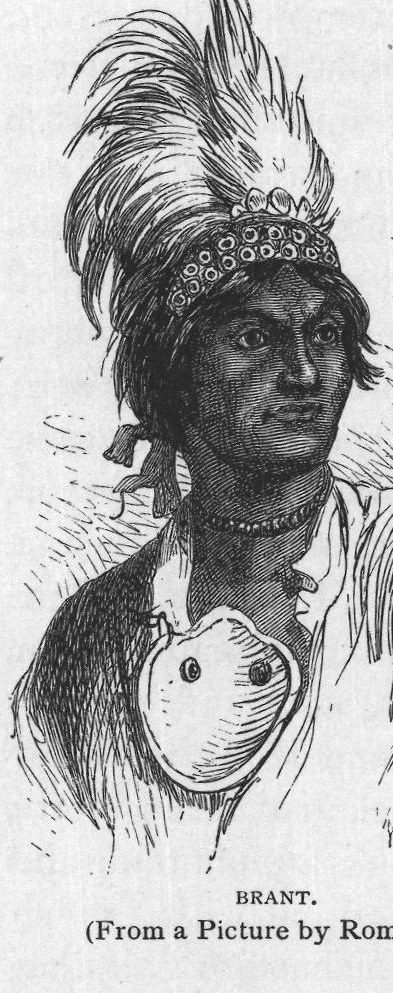
At the beginning of 1797, the British government prepared for crushing the rebellion early in the ensuing campaign. Reinforcements to the number of more than thirty-five hundred were procured from the German princes, and these, with a considerable British force, was sent to strengthen Howe below the Highlands, and Burgoyne in Canada. Governor Tryon was employed in embodying the American Tories into military battalions under Brigadier-Generals Oliver, De Lancey of New York, and Cortlandt Skinner of New Jersey. Many French Canadians joined the British forces on the Canadian frontier; and under the special instructions of Germain, the Colonial Secretary, which he had received from the king, bands of Indian savages were engaged to fight the republicans, the most of them under the general command of Joseph Brant, a Mohawk chief, a brother-in-law of Sir William Johnson, and who had been educated by the white people. He had lately returned from England, where he had conferred with the king and Germain, and been well received by the aristocracy. At court he appeared in the splendid costume of his nation (in which Romney painted him), and wearing a highly-polished and ornamented tomahawk in his belt. There he decided to espouse the cause of the crown. He did so, and served the king faithfully and vigorously. The best of the British leaders in America were opposed to employing the savages in their armies; but it was a pet project of Tryon, the king and his pliant ministers, who seem to have listened complacently to La Corne St. Luc, a bitter partisan, who said: "We must let loose the savages upon the frontiers of these scoundrels, to inspire terror, and to make them submit." Tryon, who was noted for his brutal inhumanity, strongly commended La Corne to the Secretary as a leader of the savages, and wrote to Germain, in the spring of 1777: "We [La Corne and himself] agree perfectly in sentiments respecting the propriety and importance of employing the Indians." He said La Corne had pledged his honor and his life that he would raise a corps of Canadians and savages, and "be in the environs of Albany in sixty days after he landed in Quebec." "Every means that Providence has placed in our hands ought to be employed against the rebels," said the king and his ministers.