Capture of Vera Cruz-March Toward the Capital of Mexico
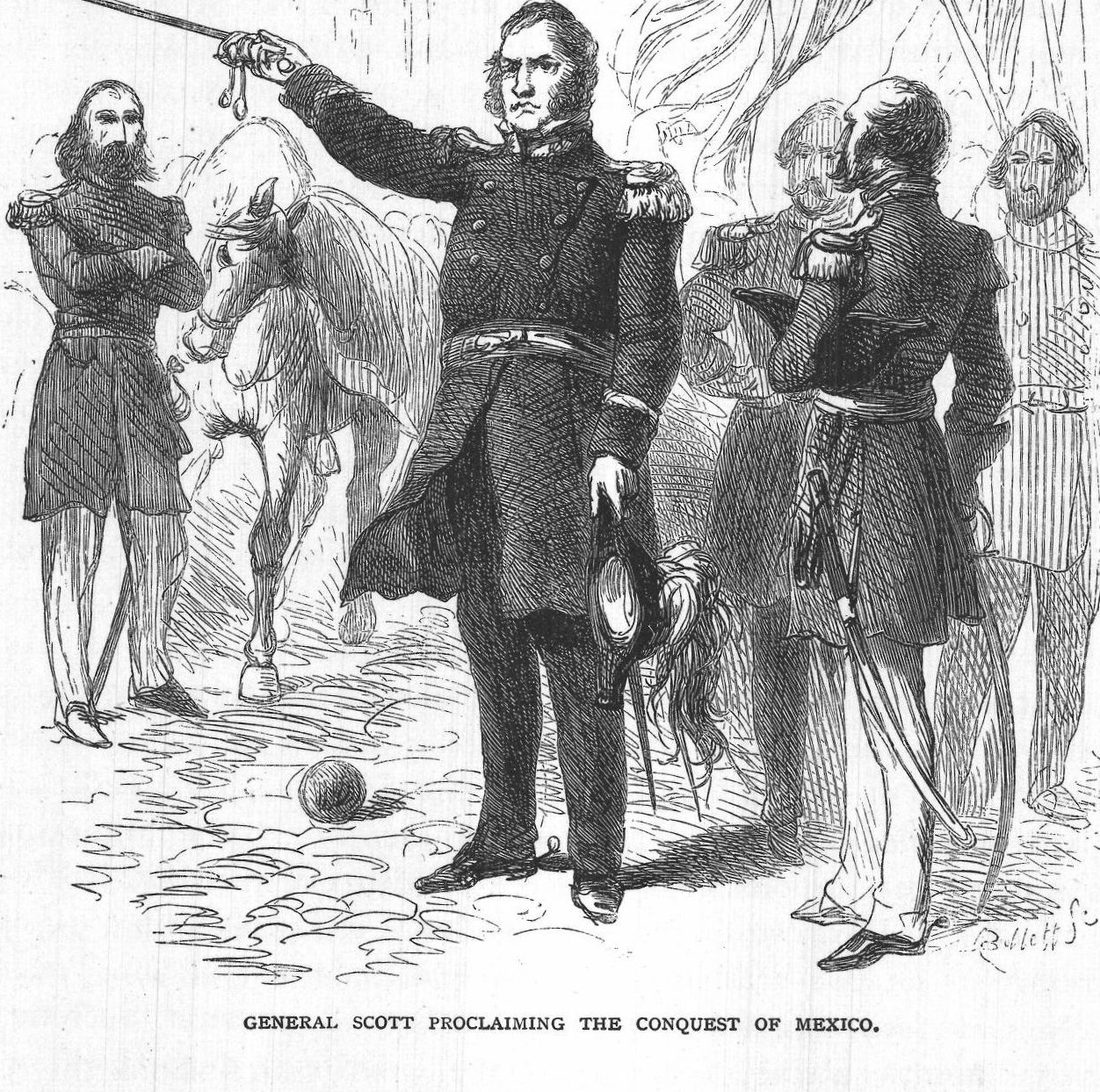
IN the month of February, 1847, powerful land and naval forces were concentrated in the Gulf of Mexico. The military were under the command of Major-General Winfield Scott, and the vessels were in charge of Commodore Connor, who was afterward succeeded by Commodore M.C. Perry. The troops were gathered at Lobos Island, about one hundred and twenty-five miles north of Vera Cruz; and on the 9th of March about thirteen thousand of them, designed for the conquest of Mexico, were landed near that city, which was considered the key of the country. Upon an island opposite was a very strong fortress, called the Castle of San Juan d'Ulloa, which the Mexicans regarded as impregnable. This fortress and the city were completely invested four days after the debarkation, and on the 22d, Scott and Connor were ready to begin the siege. On that day Scott summoned the city and fortress to surrender; and when the demand was refused, shells from seven mortars on land (soon increased to nine) were hurled upon the city. The engineering work for the siege had been skillfully prepared by the late General Totten.
For about four days a furious cannonade and bombardment were kept up on land and water. The Mexicans in the city suffered dreadfully, and on the morning of the 26th the commander made overtures for a surrender. That event occurred on the 29th, when five thousand Mexicans marched out to a plain about a mile from Vera Cruz, and then laid down their arms, gave up their flags, and returned to the interior on parole. The city and fortress, with five hundred pieces of artillery and a large amount of munitions of war, passed into the possession of the Americans. During the siege the victors had lost about eighty men in killed and wounded; the loss of the Mexicans was fearful. About a thousand were killed, and many were wounded. Scott had tried to induce the governor of Vera Cruz to send the women and children and foreign residents out of the city before the bombardment began, but he refused, and many of them perished.
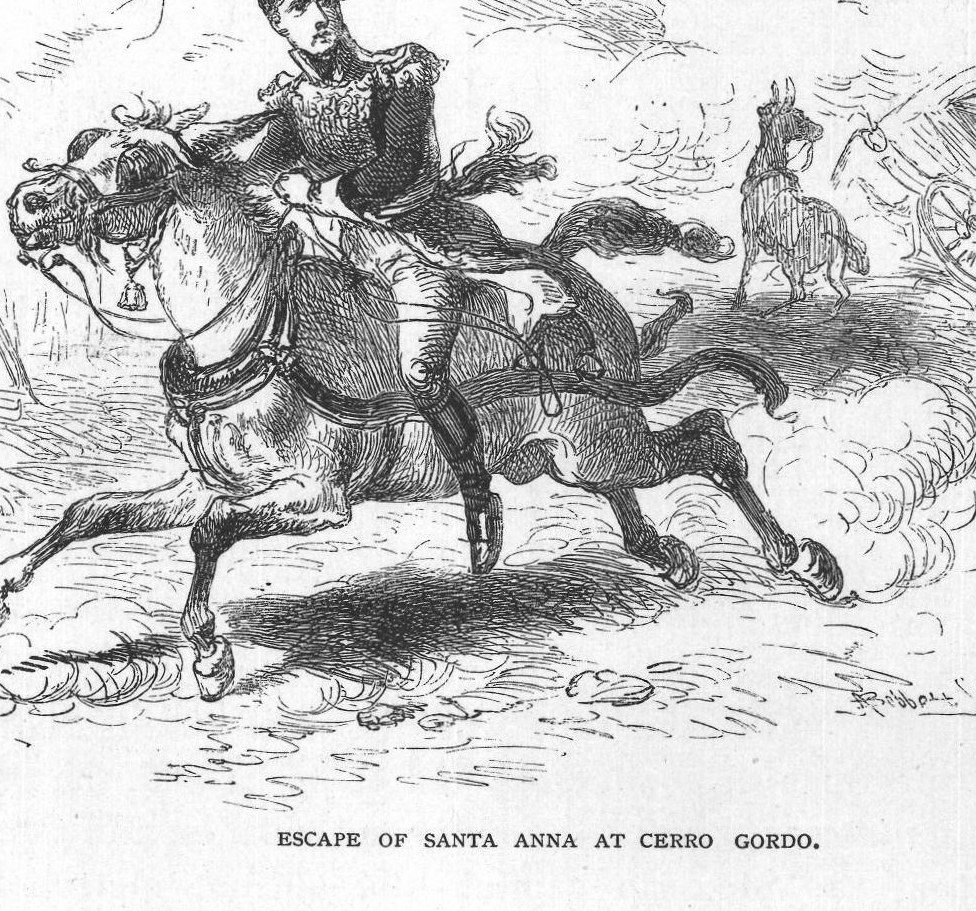
General Scott now made preparations to march for the Mexican capital by way of the Great National Road from Vera Cruz. Leaving General Worth as temporary governor at Vera Cruz, and a sufficient garrison for the castle, he moved forward on the 8th of April with about eight thousand men toward Jalapa, General Twiggs leading his division in advance. Meanwhile General Santa Anna, by extraordinary efforts after the defeat and dispersion of his army at Buena Vista, had gathered a force of about twelve thousand men from among the Sierras of Orizaba, and concentrated them upon the Heights of Cerro Gordo-a difficult mountain-pass at the foot of the eastern slope of the Cordilleras. There he was strongly fortified and was in Scott's path when, on the 13th of April, Twiggs came in sight. Scott arrived the next morning, reconnoitred the position of the enemy, and made preparations to attack him. On the 17th he issued a most remarkable general order to the army, in which he directed movements in the coming battle which, followed, led to victory, making that order appear almost prophetic in its details. The battle occurred on the 18th, and before sunset the Americans were victorious. It was fought at a wild place in the mountains. On one side was a deep dark river, on the other was a frowning declivity of rocks a thousand feet in height, bristling with batteries, while above all arose the strong fortress of Cerro Gordo. The place had to be taken by storm; and the party to do the work was composed of the regulars of Twiggs, led by the gallant Colonel Harney. Victory followed skill and bravery, and Cerro Gordo fell. Velasquez, the commander of the fortress, was killed, and the Mexican standard was hauled down by Sergeant Henry. Santa Anna, with Almonte and other generals, and eight thousand troops, escaped; the remainder were made prisoners. Santa Anna attempted to fly with his carriage, which contained a large amount of specie, but it was overturned, when, mounting a mule taken from his carriage, he escaped to the mountains, leaving behind him his wooden leg. In the vehicle was found his papers, clothing, and a pair of lady's satin slippers. The victory for the Americans was complete and decisive. The trophies were three thousand prisoners, who were paroled, forty-three bronze pieces of artillery cast in Seville, five thousand stand of arms (which were destroyed), and a large amount of munitions of war. The fugitives were pursued with vigor toward Jalapa. In that battle the Americans lost four hundred and thirty-one men.
General Worth was now with the army, and with his division led the onward march. On the 19th they entered Jalapa; and a few days afterward (April 22d, 1847) Worth unfurled the American flag over the strong castle of Perote, on the summit of the Cordilleras, fifty miles beyond Jalapa. This fortress was regarded as the strongest in Mexico after San Juan d'Ulloa. These places had been captured without resistance, for the Mexicans were appalled by the suddenness of the invasion and the swiftness of the conquests of the invaders. At Perote, the spoils were fifty-four pieces of artillery and an immense amount of munitions of war.