Bragg Driven to and from Chattanooga
General Burnside was then in command of the Army of the Ohio, and had been ordered to co-operate with Rosecrans. With twenty thousand men he climbed over the Cumberland Mountains into the magnificent Valley of East Tennessee, his baggage and stores carried, in many places, on the backs of pack-mules. On his entering the Valley, twenty thousand Confederates in East Tennessee, commanded by General Buckner, fled to Georgia and joined Bragg, when Burnside took a position near the Tennessee River, so as to have easy communication with Rosecrans at Chattanooga. The latter, meanwhile, erroneously supposing Bragg had begun a retreat toward Rome, had pushed through the mountain passes, when he was surprised to find that general, instead of retreating, concentrating his forces to attack the attenuated line of the Nationals, the extremities of which were fifty miles apart. Rosecrans proceeded at once to concentrate his own forces; and very soon the two armies were confronting each other in battle array, on each side of Chickamauga Creek, in the vicinity of Crawfish Spring, each line extending toward the slopes of Missionary Ridge. General Thomas, who was on the extreme left of the National line, opened the battle on the morning of the 19th of September. It raged with great fierceness until dark, when the Nationals seemed to have the advantage. That night General Longstreet, whom Lee had sent from Virginia to assist Bragg, arrived with fresh troops which swelled the Confederate army to seventy thousand men, and gave to it a far better soldier than the chief leader. Rosecrans's army did not then exceed, in number, fifty-five thousand men.
On the morning of the 20th the contest was renewed after a thick fog had risen from the earth. There was a fearful struggle. A furious charge upon the National right had shattered it into fragments, and these fled in disorder toward Chattanooga. This tide carried with it the troops led by Rosecrans, Crittenden and McCook; and the commanding-general, unable to join Thomas, and believing the whole army would speedily be hurrying pell-mell toward Chattanooga, hastened to that place to provide for rallying them there. Generals Sheridan and J. C. Davis rallied a part of these troops, and Thomas stood firm, frustrating every effort to turn his flank. Forty-eight hours after the battle the army, which had been withdrawn to Chattanooga, was strongly intrenched there.
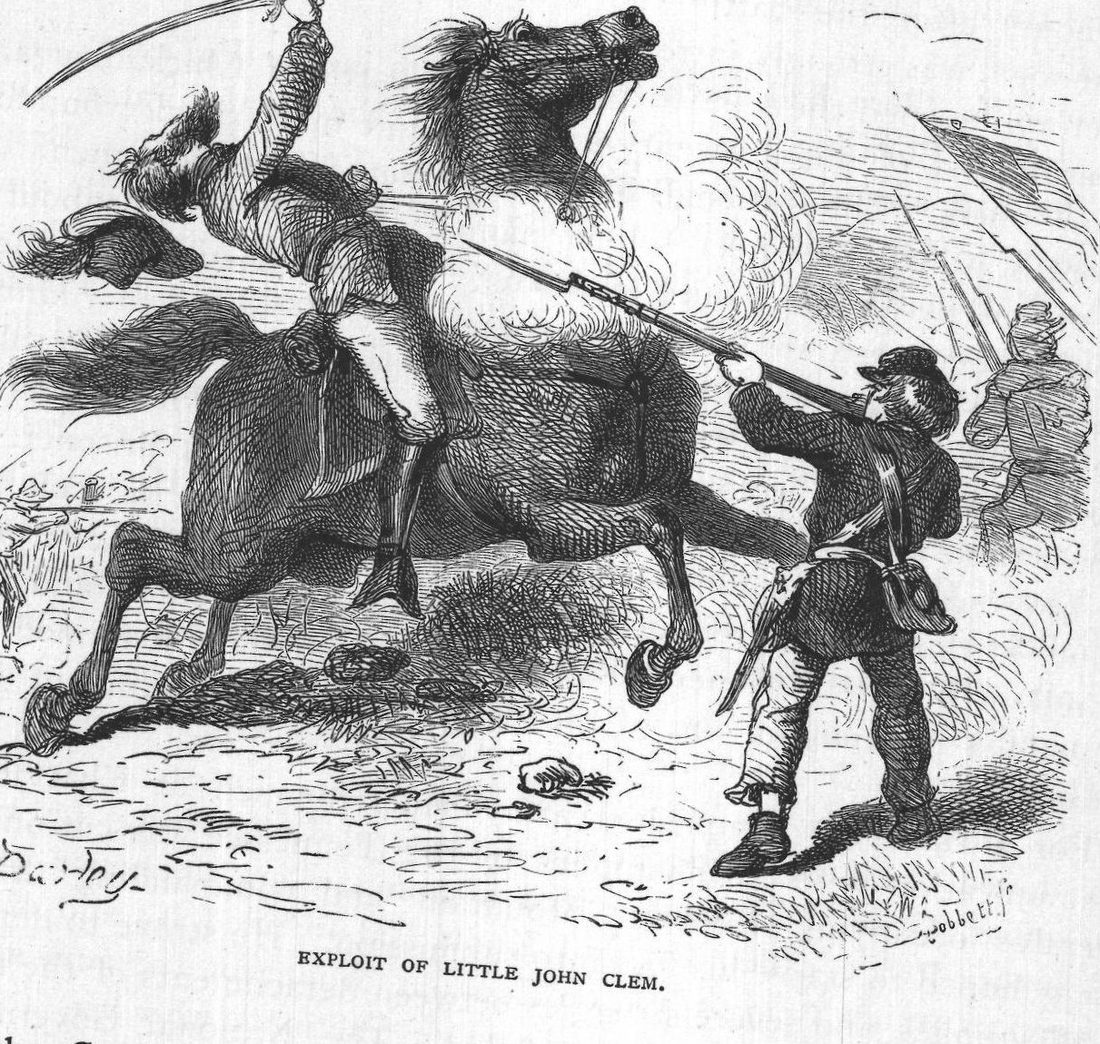
Victory crowned the Confederates in the battle of Chickamauga, but at the fearful cost of about twenty-one thousand men killed, wounded, and made prisoners. The Nationals lost about nineteen thousand men. During the contest a little volunteer soldier named John Clem, then about twelve years of age, performed a deed of daring. He had been in the thickest of the fight when, separated from his companions, he was seen running with a musket in his hand by a mounted Confederate colonel, who called out, "Stop! you little Yankee devil!" The boy halted, with his musket to an order, when the colonel rode up to make him a prisoner. Young Clem, with swift motion, brought up his gun and shot the colonel dead. The boy escaped; and for this achievement he was made a sergeant, put on duty at the headquarters of the Army of the Cumberland, and placed on the roll of honor by General Rosecrans. He grew to manhood, married, and held a position in one of the departments of Government in Washington.
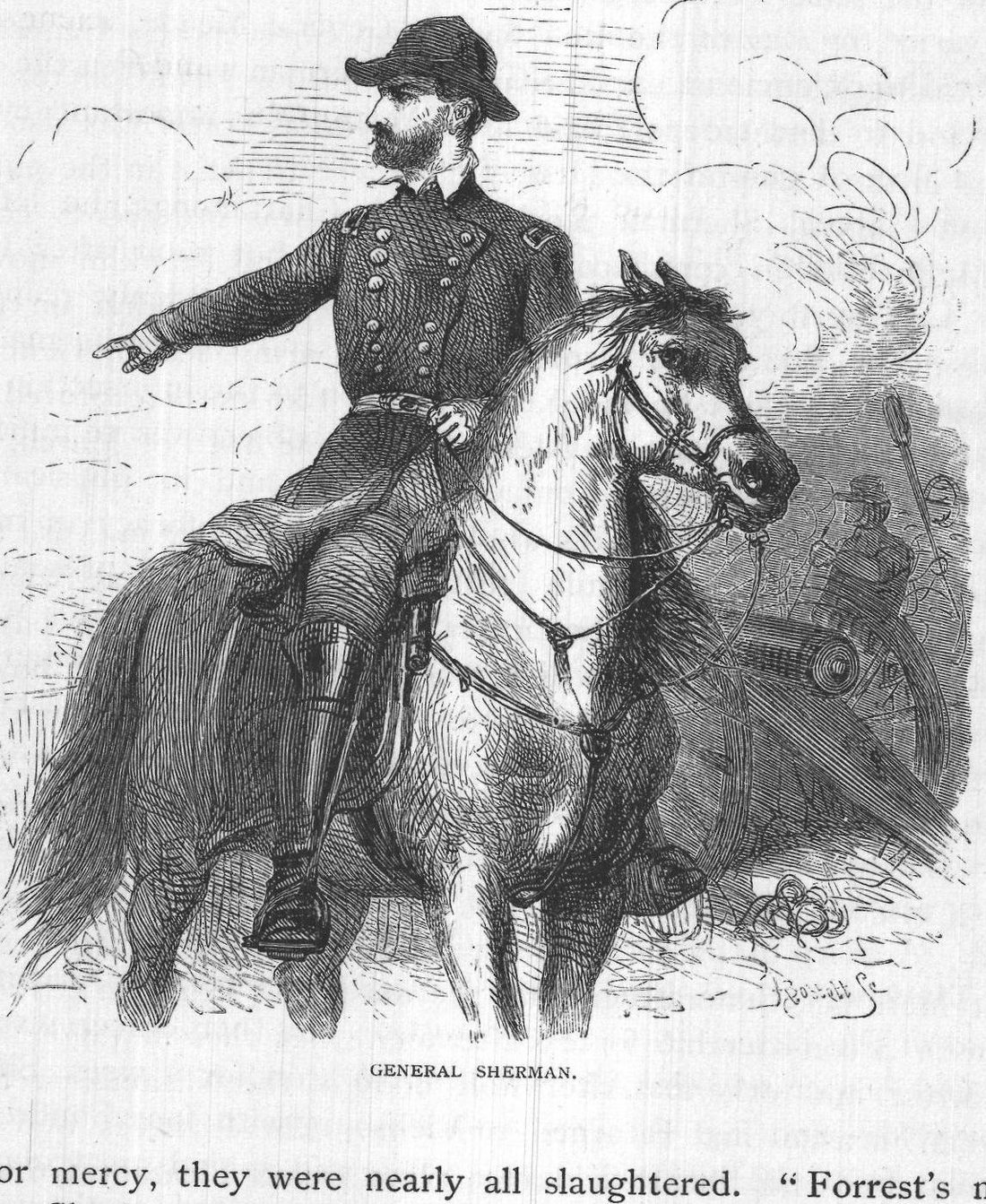
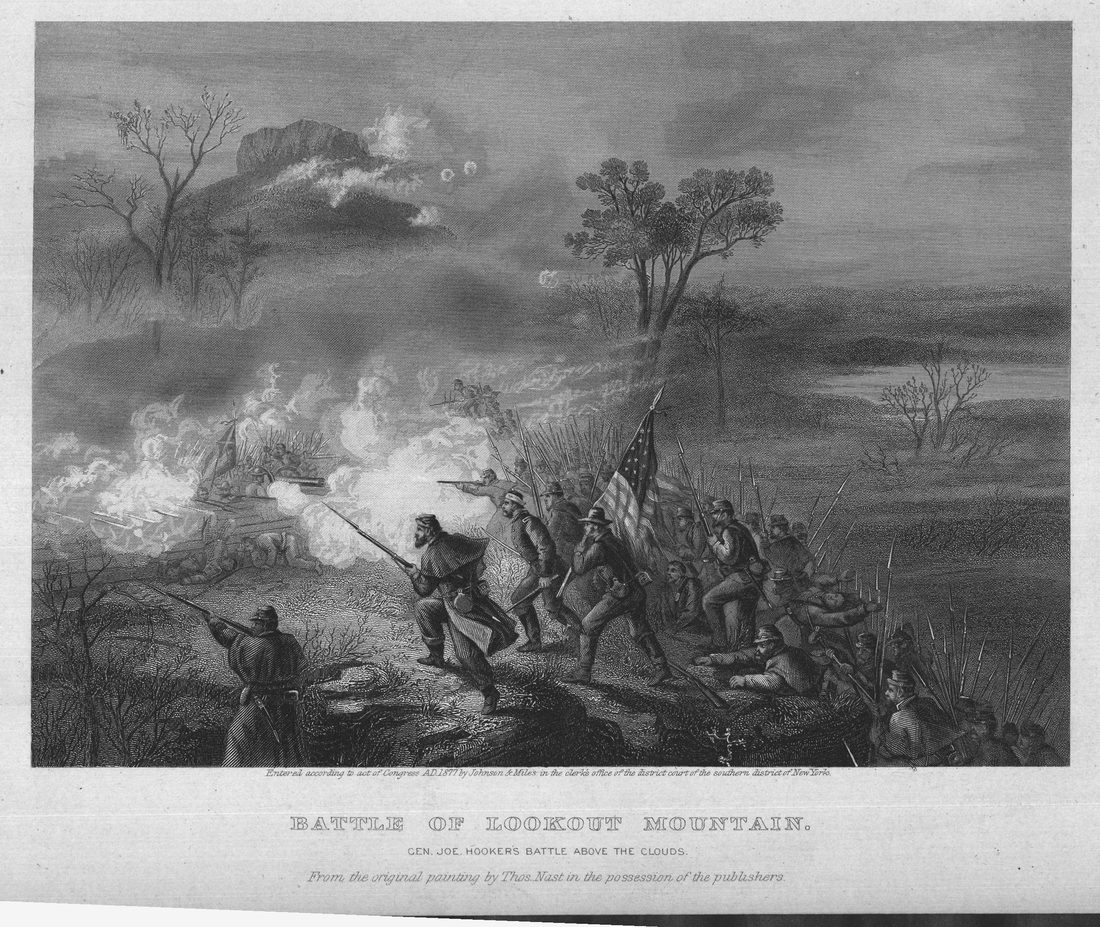
For a time the vanquished army suffered much at Chattanooga, for communication with their supplies by the Tennessee was cut off, the Confederates occupying Lookout Mountain and commanding that stream. Bragg hoped to starve his foes into submission. He strove to deprive them of all supplies, and severe struggles between detachments of the two armies were the consequences. Bragg failed. The National Government had determined to hold Chattanooga, and orders were given for the consolidation of the armies of the Cumberland and Tennessee, constituting the military division of the Mississippi, with General Grant as commander-in-chief. He had secured the free navigation of the Mississippi River, after the fall of Vicksburg and Port Hudson, by driving the Confederates, under Johnston, from the vicinity and strongly fortifying the first-named place; and when he took command of the new division, General Sherman was made the leader of the Army of the Tennessee, and General Thomas was placed in command of the Army of the Cumberland, Rosecrans having been ordered to St. Louis.
When Grant arrived at Chattanooga, he ordered Hooker, who was at Bridgeport, to advance to Lookout Valley, menace Bragg's flank, and protect the passage of supplies up the Tennessee to within a short distance from the famishing armies. This was promptly done. Hooker's main force took post at Wauhatchie, where he was attacked before daylight on the morning of the 29th of October. After a battle for three hours in the darkness, the Confederates were beaten and driven away. An amusing incident of this struggle occurred. When it began, about two hundred mules, frightened by the noise, broke from their tethers and dashed into the ranks of Wade Hampton's legion, and produced a great panic. The Confederates supposed it to be a charge of Hooker's cavalry, and fell back, at first, in great confusion. The incident was a theme for a mock-heroic poem of six stanzas in imitation of Tennyson's "Charge of the Six Hundred," two verses of which were as follows:
Was there a mule dismay'd?
Not when their long ears felt
All their ropes sundered.
Theirs not to make reply--
Theirs not to reason why--
Theirs but to make them fly--
On! to the Georgia troops
Broke the two hundred.