Beaumarchais and the Americans
A corresponding address to the king was proposed in Parliament, when the heaviest batteries of the Opposition in both houses were brought to bear upon the ministry. In the House of Lords, the Earl of Chatham (William Pitt), who strongly desired reconciliation with the Americans and was as strongly opposed to their independence, leaning upon a crutch, poured forth a flood of oratory such as distinguished him in the prime of his vigorous manhood. He opposed the further prosecution of the "inhuman war," and pleaded earnestly for conciliatory measures. He charged the ministry with lack of courage to sustain the honor of the nation, because they had allowed to pass unnoticed, what he called an insult to his government by the French court, in receiving, on friendly terms, the ambassadors of the insurgent Americans. "Can our ministers," he asked, "sustain a more humiliating disgrace? Do they dare to resent it? Do they presume even to hint at a vindication of their honor, and the dignity of the State, by requiring the dismissal of the plenipotentiaries of America?" Alluding to the ill-success of the British arms in this country, he said: "You cannot--I venture to say it--you cannot conquer America. What is your present condition there? We do not know the worst, but we know that in three campaigns we have done nothing and suffered much. You may swell every expense and every effort, still more extravagantly; pile and accumulate every assistance you can buy or borrow; traffic and barter with every little pitiful German prince that sells and sends his subjects to the shambles of a foreign prince; your efforts are forever vain and impotent--doubly so from this mercenary aid on which you rely; for it irritates to an incurable resentment the minds of your enemies--to overrun them with the mercenary sons of rapine and plumber; devoting them and their possessions to the rapacity of hireling cruelty! If I were an American, as I am an Englishman, while a foreign troop was landed in my country, I never would lay down my arms--never--never--never!" With equal vehemence Chatham condemned the employment of the American savages "to wage the horrors of this barbarous war." A member justified the employment of Indians, by saying that the British had the right to use the means "which God and nature had given them." Chatham scornfully repeated the passage, and said: "These abominable principles, and this most abominable avowal of them, demands most decisive indignation. I call upon that reverend bench (pointing to the Bishops), these holy ministers of the Gospel and pious pastors of the Church--I conjure them to join in the holy work, and to vindicate the religion of their God."
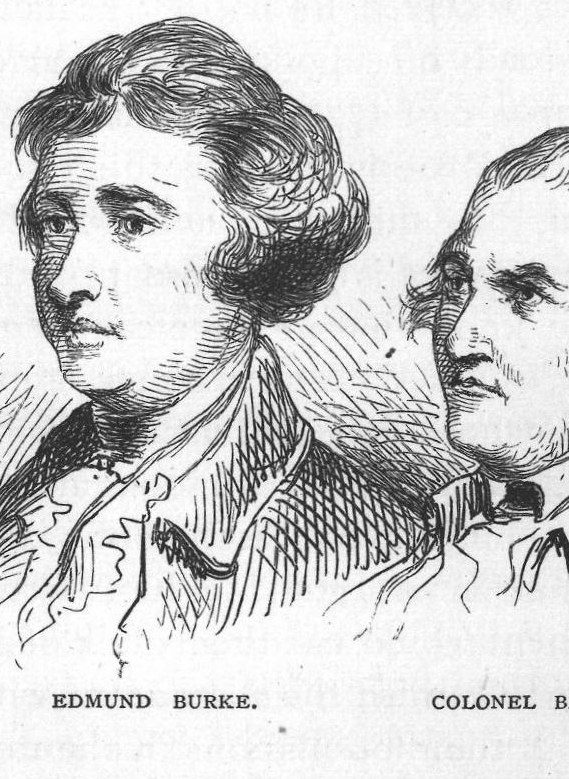
In the House of Commons, Burke, Fox, and Barre were equally severe in their denunciations; and when, on the 3d of December, news reached London of the defeat of the British in northern New York, the latter rose in his place, and with a serene and solemn countenance, asked Germain, the Colonial Secretary, what news he had received by his last express from Quebec, and to say, upon his word of honor, what had become of Burgoyne and his brave army. The haughty Secretary was irritated by the cool irony of the question, but he was compelled to admit that information of Burgoyne's surrender had reached him. He added--"It lacks confirmation." That confirmation speedily came, and Lord North was overwhelmed with grief. He could neither eat nor sleep. He saw in the event the result of the unwise measures of his sovereign, which he had sanctioned in opposition to the dictates of his own conscience and judgment; and he proposed to end the quarrel by conceding all that the Americans asked, or retire from the cabinet. It was perceived by all but the stupid and obstinate king and a few shallow courtiers that something must be done immediately toward reconciliation, or France would interfere. Leaders in both houses agreed with North. Fox said: "If no better terms can be had, I would treat with them as allies, nor do I fear the consequences of their independence." The king would not yield an iota of his pretensions to absolute sovereignty over the Americans. In turn he chided and coaxed the pliant North, when, finding his minister less yielding than usual, he conceded so much to his feelings as to suggest that in the event of a war with France and Spain (which then seemed probable) the royal troops might be withdrawn from the American provinces and employed in making war upon the French and Spanish islands. North yielded, and preparations for the campaign of 1775, against the Americans, went on vigorously.