A Dreadful March for Boston
Rumors of the skirmish at Lexington had reached the people along the line of Percy's march, and the gathering militia hung like an angry, threatening cloud upon his flanks and rear. Between two and three o'clock he met the retreating army, when he opened fire from his cannon upon the pursuing Americans, formed a hollow square, and received in it the exhausted fugitives. Many of the soldiers fell upon the ground completely overcome with fatigue, some of them "with their tongues hanging out of their mouths, like those of dogs after a chase." Percy dared not tarry long, for the woods were swarming with Minute-men. After brief rest and partaking of some refreshments, the united force resumed their march toward Boston, satisfied that if they did not get back before sunset, they would not get there at all, for the militia were gathering from the neighboring counties. It was a fearful march for the troops, and for the people of the country through which they passed. The Americans relentlessly pursued, while flanking parties of the British committed many hideous excesses, plundering houses, burning building, and ill-treating the defenceless inhabitants. All the way to West Cambridge the retreating army was dreadfully harassed by their concealed foes. There General William Heath, whom the Provincial Congress had appointed to the command of the militia, accompanied by Dr. Warren, concentrated a considerable body of Minute-men, and skirmished sharply with the British. A bullet carried away a curl-pin from a lock of hair on Warren's temple, as he was moving here and there infusing his own heroic spirit into the militia, as he did on the Breed's Hill a few weeks later. The contest was brief. The British kept the militia at bay, and pressed on toward Boston, narrowly escaping seven hundred Essex militia under Colonel Timothy Pickering, who attempted to bar the way to Charlestown, whither the fugitives were compelled to go. The regulars finally reached that village and the shelter of the guns of their frigates when Heath ordered the pursuit to be stayed.
Charlestown had been in state of panic all day. Dr. Warren rode through its streets early in the forenoon, and told the people of the bloodshed at Lexington. Then came the news from Concord, at which many of the men had seized their muskets and hastened to the country. The schools were dismissed; places of business were closed; and when it was known that the retreating British would pass through the town, many of the inhabitants gathered up their valuable effects and prepared to leave. The firing at Cambridge caused most of them to rush toward the Neck to seek safety in the country, when they were driven back in despair by the approaching fugitives. Rumors reached them that the British were slaughtering women and children in their streets, and many of the terror-stricken people passed the night in the clay-pits back of Breed's Hill. Not a single person was harmed in Charlestown. Percy ordered the women and children to stay in their houses. Reinforcements were sent over from Boston; guards were stationed; the wounded were taken to the hospital, and quiet was restored. General Pigot assumed command at Charlestown the next morning, and before noon the shattered army were in their quarters in Boston. During the memorable day, the British lost in killed, wounded, and missing, two hundred and seventy-three men; the Provincials lost one hundred and three.
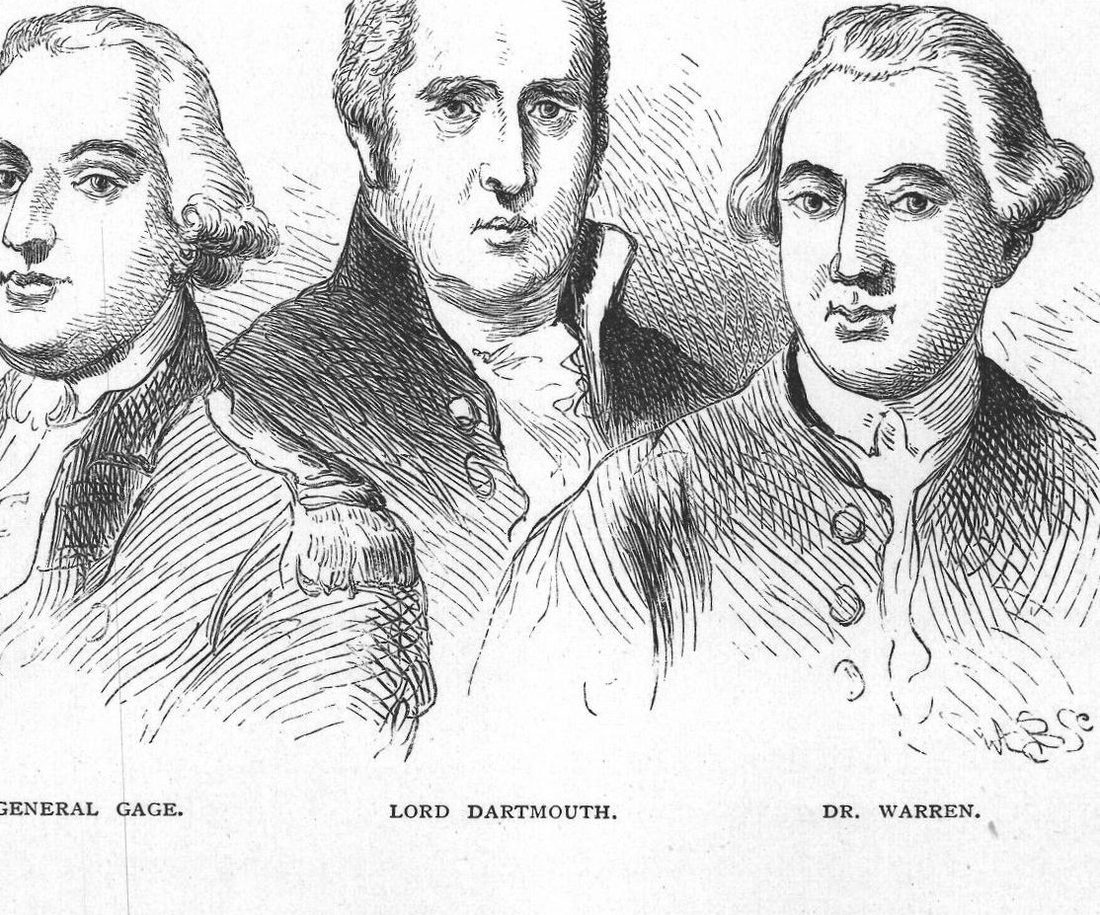
Three days after the fight at Lexington and Concord, the Provincial Congress of Massachusetts assembled at Watertown, seven miles west of Boston, and chose Dr. Joseph Warren to be their President. A committee was appointed to draw up a "narrative of the massacre." They took many depositions, by which it was proven conclusively that the British fired the first shots. This narrative, with a firm and respectful Address to the Inhabitants of Great Britain, was sent to Arthur Lee, the colonial agent in England, and were published in the London Chronicle on the 30th of May, nine days before General Gage's despatches reached his government. The ministry were confounded, and affected to disbelieve the statements, but their truth was soon established. When on the 10th of June, the despatches of Gage were published, London was almost as much excited as Boston had been. Placards, lampoons, caricatures, and doggerel verses were hawked about the streets in profusion. The retreat of the British from Concord and Lexington was properly regarded as a defeat and a flight, and ministers were reviled because "the great British army at Boston had been beaten by a flock of Yankees."
The temporizing Dartmouth now saw the mischievous results of the policy of the ministry, and said: "The effects of General Gage's attempt at Concord are fatal. By that unfortunate event, the happy moment of advantage is lost." Poor Gage was held responsible for the blunders of the ministry, and was censured without stint.